Let me tell you something. When I watch beginners play basketball, I see the same mistakes over and over. They travel without knowing it. They stand in the paint too long. They get confused about fouls.
Why does this happen? Because NBA rules can feel overwhelming at first. There are so many things to remember. But here’s the good news. You don’t need to learn everything at once.
Most new players just need to focus on the 10 basic rules. Master these, and you’ll look like you know what you’re doing. You’ll stop making silly mistakes. And you’ll actually enjoy the game more.
NBA Rules
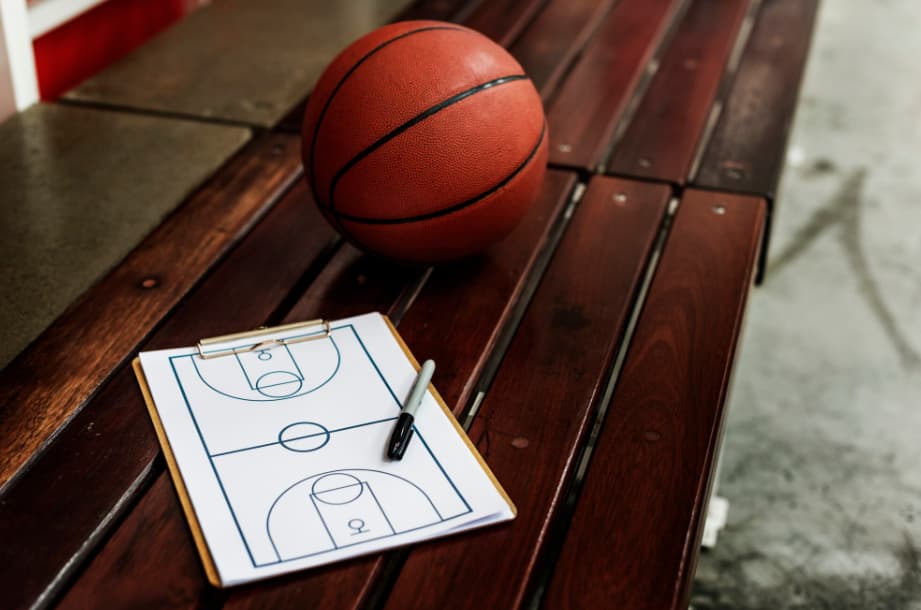
This guide breaks down the NBA basketball rules that matter most. Whether you’re 10 years old or 40, these are the rules you need first.
The Top 10 NBA Rules Ranked By Importance
Here’s my ranking based on what beginners mess up most often:
-
#1 – Traveling (The Most Broken Rule)
Taking more than two steps without dribbling is traveling. This kills more beginner players than anything else. You catch the ball, you get two steps, then you must shoot, pass, or stop.
In youth basketball, refs are more forgiving. In the NBA? They call it tight.
-
#2 – Double Dribble
Dribble once. Pick up the ball. Dribble again. That’s illegal. Also, bouncing the ball with both hands at once counts as double-double-dribble.
Kids do this constantly when they panic.
-
#3 – Three-Second Rule
You cannot stand in the painted area (the key) for more than three seconds on offense. Keep moving. Step out. Step back in. Reset your count.
This rule exists in the NBA but not in all youth leagues.
-
#4 – Backcourt Violation
Once you cross half-court with the ball, you cannot go back. If the ball crosses back over that line, the other team gets it.
Youth players forget this when they’re being pressured.
-
#5 – Fouls (Illegal Contact)
Pushing, holding, hitting, slapping. All fouls. You get six fouls in the NBA before you’re out. In high school and youth leagues, it’s usually five fouls.
-
#6 – Scoring Rules
Inside the arc = 2 points. Outside the arc = 3 points. Free throws = 1 point each. Simple math, but beginners need to understand why players take certain shots.
-
#7 – Shot Clock (24 Seconds in NBA)
In the NBA, you have 24 seconds to attempt a shot. Youth leagues often don’t use shot clocks, or they use 30-35 seconds. This changes the game’s pace completely.
-
#8 – Five-Second Rule
When you’re holding the ball and being closely guarded, you have five seconds to pass, shoot, or dribble. Also, when inbound, you get five seconds to get the ball in play.
-
#9 – Goaltending
Don’t touch the ball when it’s coming down toward the basket. Don’t touch it when it’s above the rim. If you do, the other team gets the points automatically.
-
#10 – Jump Ball / Possession Arrow
When two players grab the ball at the same time, there’s a jump ball situation. In youth basketball, they use a possession arrow instead of actually jumping. The NBA does actual jump balls.
Quick Reference: Rule, Description, and Real Examples
| Rule | What It Means | Example From Real Games |
|---|---|---|
| Traveling | Taking 3+ steps without dribbling | Player catches pass, takes four steps to layup – whistle blown |
| Double Dribble | Dribbling, stopping, then dribbling again | Guard picks up dribble, gets trapped, tries to dribble again – turnover |
| 3-Second Violation | Standing in paint for more than 3 seconds | Center camps under the basket for 5 seconds – offensive violation |
| Backcourt Violation | Bringing the ball back over half-court | Guard crosses midcourt, passes back to teammate behind the line – turnover |
| Personal Foul | Illegal physical contact | Defender pushes offensive player during drive – foul called |
| Charging | An offensive player runs into a set defender | Driver plows into defender’s chest – offensive foul |
| Blocking | Defender hits the offensive player illegally | Defender slides under jumping shooter – defensive foul |
| Goaltending | Touching the ball on the downward flight | Defender swats the ball while it’s dropping to the rim – basket counts |
Understanding Scoring: The Foundation of NBA Rules
Let’s talk points. This is where the basketball rules for beginners start making sense.
-
Two-Point Field Goals
Any shot made inside the three-point line counts as two points. This includes layups, dunks, and mid-range jumpers. About 60% of NBA shots come from this range.
-
Three-Point Field Goals
The three-point line is 23.75 feet from the basket in the NBA. In high school, it’s only 19.75 feet. This is why your favorite NBA shooter might struggle in college games at first.
If your foot is on the line when you shoot, it only counts as two points. Your entire foot must be behind the line.
-
Free Throws
Each free throw is worth one point. You get these after certain fouls. The shooter stands at the free-throw line (15 feet from the basket) with nobody guarding them.
If you’re fouled while shooting and miss, you get two free throws. If you’re fouled while shooting and make it, you get one free throw plus the basket counts. That’s a three-point play.
If you’re fouled while shooting a three-pointer and miss, you get three free throws. Make the shot anyway? You get one free throw, and that’s a four-point play.
Violations: When You Lose The Ball Without Being Fouled?
Violations are different from fouls. With violations, nobody gets free throws. The other team just gets the ball.
-
Traveling
This is the most common violation in youth basketball. The rule says you can take two steps after you stop dribbling. But here’s what confuses people: you can take a “gather step” before those two steps.
NBA refs give players more freedom on this than youth refs. You’ll see NBA players take what looks like three steps, but it’s legal because of the gather.
-
Double Dribble
Once you stop dribbling, you’re done. You cannot start dribbling again. Also, you cannot dribble with two hands at the same time.
Kids learning basketball often double-dribble when they’re nervous. They bounce the ball, pick it up because a defender is coming, then try to bounce it again.
-
Goaltending
If the ball is on its way down toward the basket, leave it alone. If it’s touched the backboard and is heading toward the rim, leave it alone. If it’s above the rim and inside the cylinder, leave it alone.
Blocking a shot while it’s still going up? That’s legal, and it’s called a block.
-
Backcourt Violation
You have 10 seconds to cross half-court after your team gets the ball. Once you cross, you cannot go back. If the ball goes back over the line, it’s a turnover.
In the NBA, guards sometimes forget this when being trapped near midcourt.
-
Out of Bounds
Step on the line, you’re out. The ball touches the line; it’s out. The last person to touch the ball before it goes out loses possession.
Understanding Fouls: The Rules That Give Free Throws
Fouls are about contact. In the NBA rules for beginners PDF guides you’ll find online, fouls take up the most pages. Why? Because there are many types.
-
Shooting Fouls
If you foul someone while they’re shooting, they get free throws. Two free throws for a two-point attempt. Three free throws for a three-point attempt.
This is why offensive players try to draw contact while shooting. Smart play.
-
Blocking Fouls
If you’re moving when an offensive player runs into you, it’s probably a blocking foul on you. You need to be set (both feet planted) before contact happens.
-
Charging Fouls
If a defender is set and you run them over, that’s a charge. It’s an offensive foul. The defense gets the ball.
This is one of the hardest calls in basketball. Sometimes refs get it wrong.
-
Flagrant Fouls
Excessive contact. Dangerous plays. Hitting someone in the face. These are flagrant fouls. The fouled player gets free throws, and their team keeps the ball.
These are rare but serious.
-
Technical Fouls
These are behavior fouls. Arguing with refs. Cursing. Unsportsmanlike conduct. Hanging on the rim too long after a dunk.
Technical fouls give the other team one free throw and possession of the ball.
-
Intentional Fouls
Sometimes players foul on purpose at the end of games to stop the clock. These give two free throws and possession to the other team.
-
Personal Foul Limits
In the NBA, you get six fouls before you’re ejected. In high school and youth leagues, it’s five fouls. Once you reach your limit, you’re done for the game.
Common Mistakes Beginners Make With Rules
| Mistake | Why It Happens | How To Fix It |
|---|---|---|
| Traveling on layups | Taking too many steps | Practice two-step layups slowly |
| Standing in the paint | Forgetting the 3-second count | Keep moving, step in and out |
| Double dribbling under pressure | Panic response | Practice dribbling with defenders |
| Reaching in on defense | Trying to steal the ball | Stay in front, move feet, not hands |
| Not knowing when the ball is out | Not watching lines | Study court boundaries during breaks |
| Arguing with refs | Frustration | Accept calls, focus on the next play |
Basketball Rules For Kids: A Simpler Starting Point
If you’re teaching basketball rules for kids, start with these five basics.
This answers the common question: What are the 5 basic rules of basketball?
- 1. Dribble when you move
You cannot walk with the ball. If you want to move, you must bounce the ball.
-
2. Don’t hit or push
Keep your hands to yourself. Play the ball, not the player.
-
3. Shoot into the right basket
Know which basket is yours. Sounds obvious, but young kids get confused after halftime.
-
4. Stay out of the paint on offense
You can visit the paint, but you cannot live there. Three seconds, then move.
-
5. Two steps after you stop dribbling
Catch the ball, step once, step twice, then shoot or pass.
For youth players just starting, these five rules cover 90% of situations. The 10 rules of basketball that advanced players need can come later.
Many coaches look for a basketball rules for beginners pdf or 10 basic rules of basketball PDF to print and hand out. The rules I’ve listed here work perfectly for that purpose.
Youth Basketball vs NBA: Key Differences
Here’s what changes as players move from youth leagues to the NBA:
Game Length
- Youth: Four 6-minute or 8-minute quarters
- High School: Four 8-minute quarters
- NBA: Four 12-minute quarters
Three-Point Distance
- Youth: Often, no three-point line
- High School: 19.75 feet
- NBA: 23.75 feet
Foul Limit
- Youth/High School: 5 fouls and you’re out
- NBA: 6 fouls and you’re out
Shot Clock
- Youth: Usually none
- High School: 30-35 seconds (varies by state)
- NBA: 24 seconds
Court Size
- Youth: Often smaller courts
- High School: 84 feet by 50 feet
- NBA: 94 feet by 50 feet
These differences matter. A player who dominates youth basketball might struggle adjusting to NBA timing and spacing.
Final Thoughts: Master These Rules First
Learning NBA rules doesn’t have to be complicated. Focus on the top 10 rules I’ve ranked here. These cover the violations and fouls that actually happen in games.
Don’t try to memorize everything at once. Watch games and see these rules in action. You’ll learn faster by seeing them than by reading them.
For beginners, traveling and double dribble are your biggest enemies. Fix those two, and you’re already ahead of most new players.
For young players, start with the five basic rules I listed in the kids section. Build from there as they get comfortable.
Whether you’re looking for a detailed NBA rules for beginners PDF or just want to understand the 10 rules of basketball before your first game, this guide covers what matters most.
The best players aren’t the ones who know every obscure rule. They’re the ones who never violate the basic rules. They don’t travel. They don’t double-dribble. They don’t pick up silly fouls.
Start there. Master the basics. Everything else will follow.
Now get out there and play. The rules make sense once you see them in action. And remember: even NBA players still make rule mistakes sometimes. You’ll be fine.
About the Author
