
Sports have always been a way for humans to test their limits, celebrate traditions, and come together as communities.
But not all sports involve stadiums packed with thousands of fans or athletes competing for Olympic gold.
Some sports are so bizarre, so unexpected, and so wonderfully strange that they make you wonder how anyone thought of them in the first place.
Welcome to the world of weird sports – competitions that range from chasing cheese down steep hills to racing while sitting on a toilet, from charming worms out of the ground to playing rugby underwater.
These aren’t joke activities or pranks. Real people train seriously for these events, travel across countries to compete, and take home trophies and prizes with genuine pride.
Why do humans invent such unusual competitions? Sometimes it’s rooted in centuries-old traditions.
Other times it’s pure creativity and the desire to do something different.
Many weird sports started as jokes or pub bets that somehow turned into annual festivals attracting thousands of spectators.
What makes them special is that they require real skill, fitness, courage, and often a great sense of humor.
These sports are played seriously in different countries around the world.
Some look absolutely ridiculous from the outside, but when you watch competitors in action, you realize they’re legitimate athletes pushing themselves to win.
From Finland to Spain, from England to Australia, weird sports have become part of local culture, tourism attractions, and viral internet sensations.
Weird Sports
Let’s explore the strangest, most entertaining, and genuinely fascinating weird sports that prove human creativity knows no bounds.
Top List of Weird Sports from Around the World
| Weird Sport Name | Country of Origin | Played On | Main Equipment | What Makes It Weird |
|---|---|---|---|---|
| Axe Throwing | Canada/USA | Indoor/Outdoor Ranges | Axes, Wooden Targets | Throwing sharp axes at targets like darts |
| Bog Snorkelling | Wales, UK | Peat Bog Trenches | Snorkel, Flippers | Swimming through muddy bogs without proper strokes |
| Bossaball | Spain | Inflatable Court | Volleyball, Trampolines | Volleyball combined with gymnastics on trampolines |
| Cheese Rolling | England | Steep Hill | 9lb Cheese Wheel | Chasing a rolling cheese down a dangerous hill |
| Chess Boxing | Netherlands | Boxing Ring | Chess Set, Boxing Gloves | Alternating between chess and boxing rounds |
| Cycleball | Germany | Indoor Court | Fixed-Gear Bicycles, Ball | Playing football while riding bicycles |
| Extreme Ironing | England | Various Remote Locations | Iron, Ironing Board | Ironing clothes in dangerous or remote places |
| Giant Pumpkin Kayaking | Canada | Lakes | Hollowed Giant Pumpkins | Paddling inside giant carved pumpkins |
| Mud-Pit Belly Flop | USA | Mud Pit | None | Belly flopping into mud for the biggest splash |
| Outhouse Racing | USA | Hills/Streets | Wheeled Outhouses | Racing downhill while sitting on toilets |
| Parkour | France | Urban Environments | None | Running and jumping over city obstacles |
| Quidditch | USA (from Harry Potter) | Grass Fields | Broomsticks, Multiple Balls | Playing Harry Potter’s fictional sport in real life |
| Running of the Bulls | Spain | City Streets | None | Running in front of charging bulls |
| Snail Racing | England | Circular Track | Garden Snails | Racing ordinary garden snails |
| Toe Wrestling | England | Tables/Mats | None | Wrestling using only your toes |
| Underwater Football | USA/Europe | Swimming Pools | Weighted Ball, Snorkeling Gear | Playing football at the bottom of pools |
| Underwater Hockey | England | Pool Bottom | Short Sticks, Puck, Snorkeling Gear | Hockey played underwater with breath-holding |
| Underwater Rugby | Germany | Swimming Pools | Weighted Ball, Goals | Rugby played entirely underwater |
| Unicycle Basketball | USA | Basketball Courts | Unicycles, Basketball | Playing basketball while riding unicycles |
| Unicycle Hockey | Australia/USA | Hockey Rinks | Unicycles, Hockey Sticks | Playing hockey on unicycles |
| Unicycle Polo | USA | Polo Fields | Unicycles, Mallets, Ball | Traditional polo, but riding unicycles |
| Wife Carrying | Finland | Obstacle Course | None (carrying partner) | Men racing while carrying female partners |
| Wood Chopping | Australia/USA | Outdoor Venues | Axes, Logs | Competitive speed chopping through wood |
| Worm Charming | England | Grassy Plots | None (vibrations/sounds) | Coaxing earthworms out of the ground |
| Zorbing | New Zealand | Hills/Water | Giant Inflatable Orbs | Rolling downhill inside transparent balls |
| Shin Kicking | England | Grass Fields | Straw (for padding) | Competitors kick each other’s shins until one falls |
| Bubble Football | Norway | Football Fields | Inflatable Bubbles | Playing football while encased in plastic bubbles |
| Ferret Legging | England | Any Standing Space | Live Ferrets, Trousers | Keeping ferrets down your pants as long as possible |
| Camel Wrestling | Turkey | Sand Arenas | None | Two male camels are wrestling with each other |
| Hornussen | Switzerland | Open Fields | Puck, Wooden Boards | Hitting a puck while others try to block with boards |
| Pillow Fighting | Various Countries | Platforms/Beams | Pillows | Competitive pillow fights on elevated beams |
| Sepak Takraw | Southeast Asia | Court with Net | Rattan Ball | Volleyball is played with feet, knees, and head |
| Competitive Eating | USA | Tables/Stages | Various Foods | Eating massive amounts of food against time |
| Fireball Soccer | Indonesia | Streets | Flaming Coconut Ball | Playing football with a ball soaked in kerosene and set on fire |
| Coal Carrying | England | Streets/Courses | Heavy Coal Bags | Racing while carrying heavy bags of coal |
| Haggis Hurling | Scotland | Open Fields | Haggis (Scottish dish) | Throwing haggis as far as possible |
| Mosquito Killing | Finland | Outdoor Areas | Hands Only | Competing to kill the most mosquitoes |
| Air Guitar Championships | Finland | Concert Stages | Imaginary Guitars | Performing guitar solos without actual instruments |
| Mobile Phone Throwing | Finland | Open Fields | Old Mobile Phones | Throwing mobile phones for distance |
| Bed Racing | England | Streets | Wheeled Beds | Racing beds on wheels through streets |
| Ostrich Racing | South Africa | Race Tracks | Ostriches (as mounts) | Racing while riding ostriches |
| Gurning | England | Stages | Horse Collar Frame | Making the ugliest faces through a horse collar |
Axe Throwing
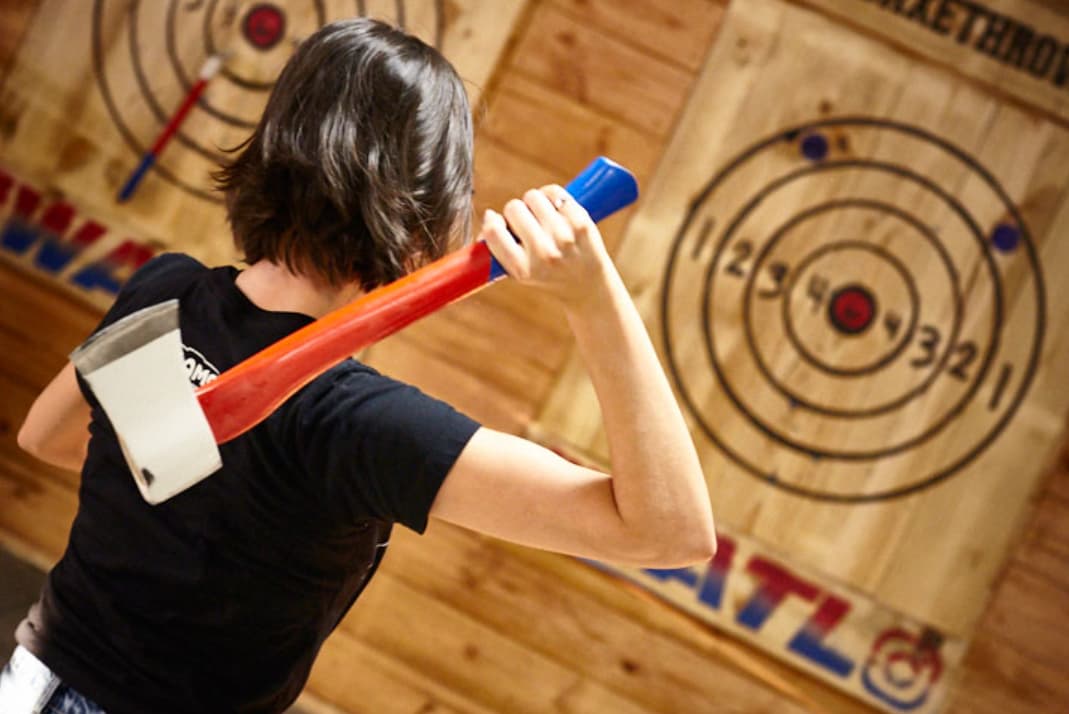
Axe throwing has become surprisingly popular at lumberjack competitions and urban entertainment venues.
Players throw axes at wooden targets, attempting to hit the bullseye, just like darts, but with much sharper and heavier equipment.
The target consists of rings with the outer ring worth 1 point, increasing inward until the bullseye scores 5 points. In standard games, each player gets 5 throws with a maximum possible score of 25 points.
What started as a skill demonstration at logging competitions has evolved into a recreational sport with dedicated venues in cities worldwide. Competitors develop techniques for grip, stance, rotation, and release to consistently hit their targets.
While it looks dangerous, proper safety measures and training make it accessible for beginners, though the thrill of hurling a sharp axe through the air never gets old.
Bog Snorkelling
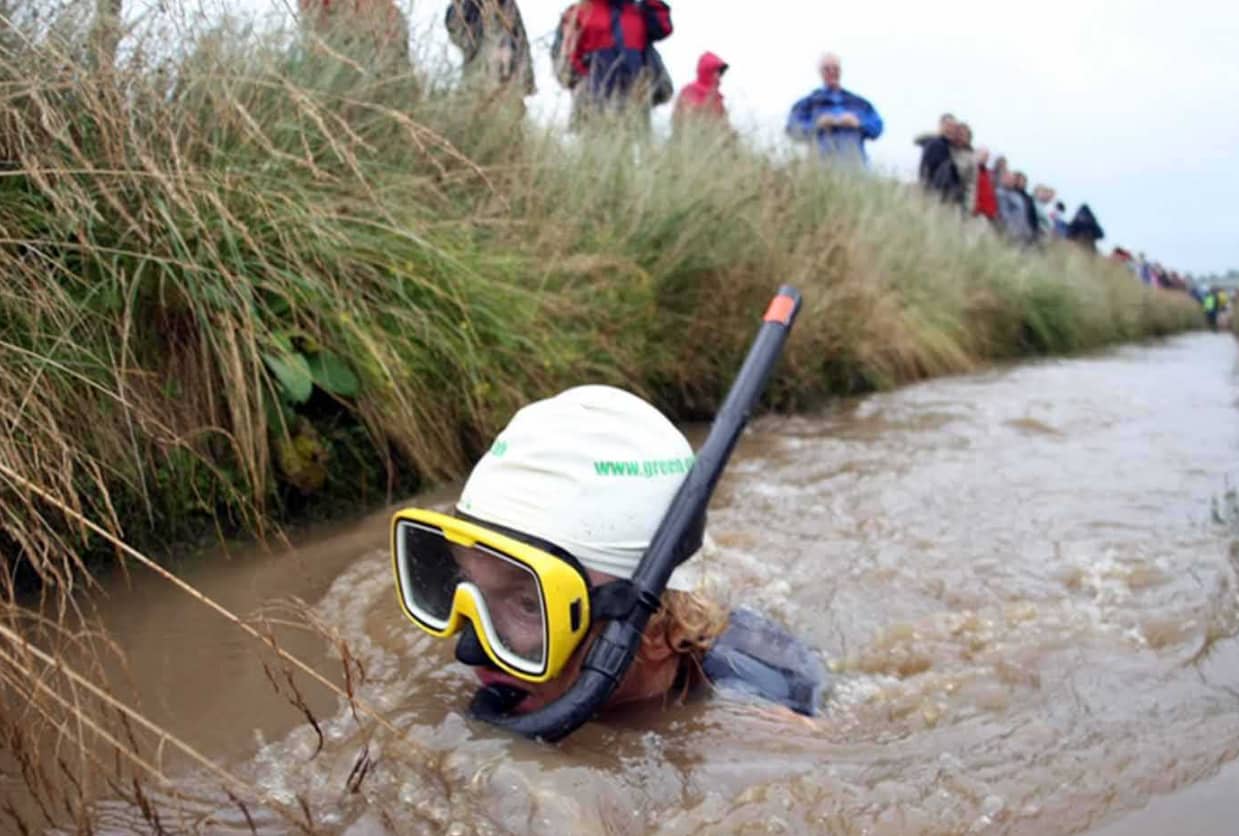
Bog snorkelling is exactly as unpleasant as it sounds, yet hundreds of competitors willingly plunge into cold, murky peat bog water every year.
The sport originated in Wales and involves swimming through a 55-meter-long water-filled trench carved through a peat bog consisting of decomposed plant material.
Competitors wear snorkels and flippers but cannot use conventional swimming strokes – they must rely entirely on flipper power to propel themselves through the dense, muddy water.
The water is cold, visibility is essentially zero, and the texture is like swimming through thick soup. Kirsty Johnson set the world record in 2014 with an impressive time of 1 minute and 22.56 seconds.
The annual World Bog Snorkelling Championships held at Waen Rhydd peat bog near Llanwrtyd Wells attracts competitors from around the world.
Some participants even compete in elaborate costumes, adding entertainment value to an already bizarre spectacle.
Bossaball
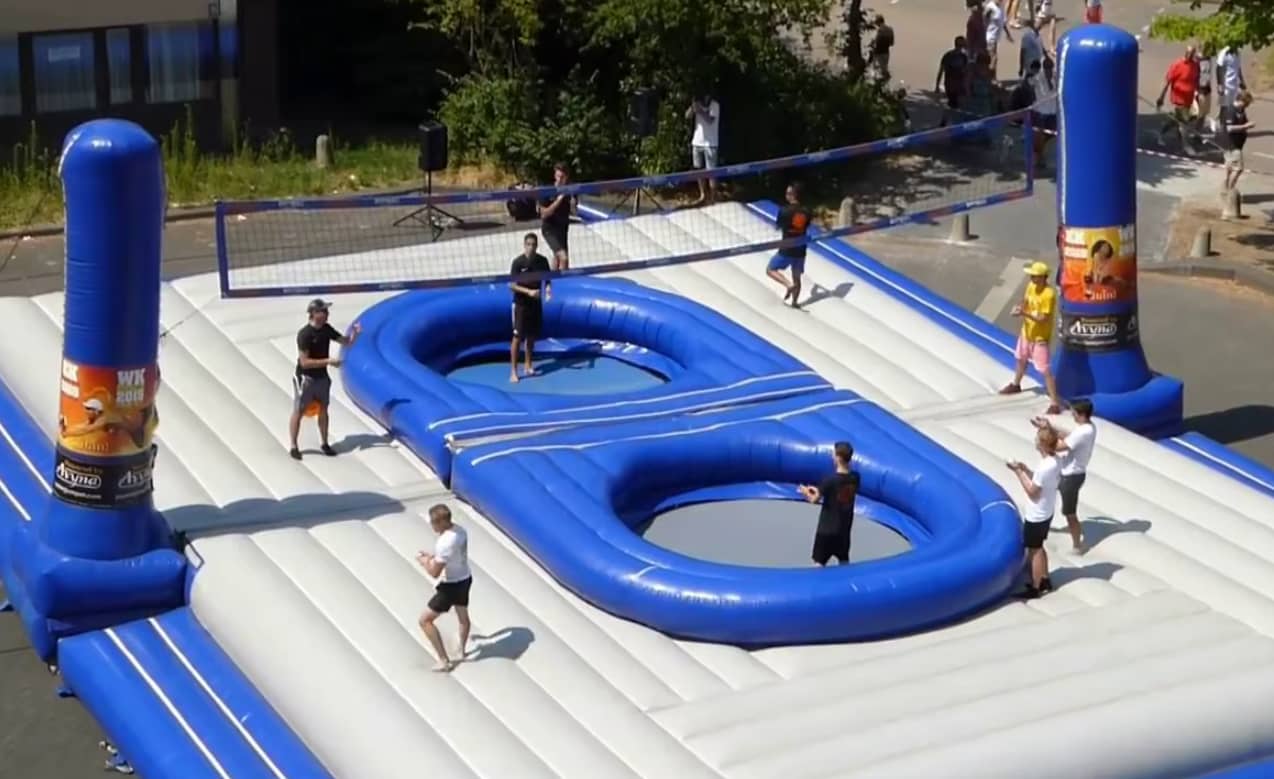
Originating in Spain, bossaball is a genuinely athletic hybrid sport combining elements of volleyball, football, gymnastics, and Brazilian capoeira.
The game is played on an enormous inflatable court with built-in trampolines on each side of a net. Teams consist of 4-5 players whose objective is to get the ball over the net in ways the opposing team cannot return.
Players can use any part of their body, including hands, feet, and head, with different point values awarded depending on the technique used.
The trampolines allow for spectacular aerial maneuvers and acrobatic spikes that would be impossible in traditional volleyball.
What makes bossaball weird is the surreal combination of bouncing players doing flips and kicks on an inflatable surface while maintaining competitive volleyball strategy.
The sport has spread across Europe, South America, and the Middle East, with international tournaments showcasing incredible athleticism mixed with pure fun.
Cheese Rolling

The Cooper’s Hill Cheese-Rolling and Wake is an annual tradition near Gloucester, England, that perfectly captures the chaotic spirit of weird sports.
A 9-pound round of Double Gloucester cheese is rolled from the top of an extremely steep hill, and competitors chase after it in a mad scramble to be first across the finish line at the bottom.
The hill has a gradient of about 1:1 in places, meaning it’s nearly vertical.
The cheese reaches speeds of up to 70 mph, so catching it is virtually impossible – the real competition is simply reaching the bottom first.
Injuries are common, with sprained ankles, broken bones, and concussions occurring regularly despite safety measures.
The event dates back centuries, with some claiming it has pagan origins related to encouraging fertility and sun worship.
Winners keep the cheese, making it one of the few sports where your prize is an actual wheel of dairy.
The event attracts thousands of spectators and competitors from around the world who are willing to risk bodily harm for cheese and glory.
Chess Boxing

Chess boxing is the ultimate test of both brain and brawn, invented by Dutch artist Iepe Rubingh after being inspired by a French comic book.
The sport alternates between 5 rounds of boxing and 6 rounds of chess for a total of 11 rounds, each lasting 3 minutes.
Competitors must be skilled at both disciplines because victory can come from either a knockout, checkmate, or judges’ decision if the match goes the distance.
Between boxing rounds, competitors sit at a chessboard with headphones playing music to help them concentrate despite the crowd and their elevated heart rates from physical exertion.
The contrast is jarring – one moment throwing punches, the next moment calculating complex chess strategies while still breathing heavily.
Chess boxing requires unique training that develops both physical conditioning and mental acuity while exhausted.
The sport has gained a cult following in Europe and Asia, with dedicated chess boxing organizations hosting championships.
It’s weird because few sports demand such dramatically different skills, yet it works surprisingly well as spectator entertainment.
Cycleball
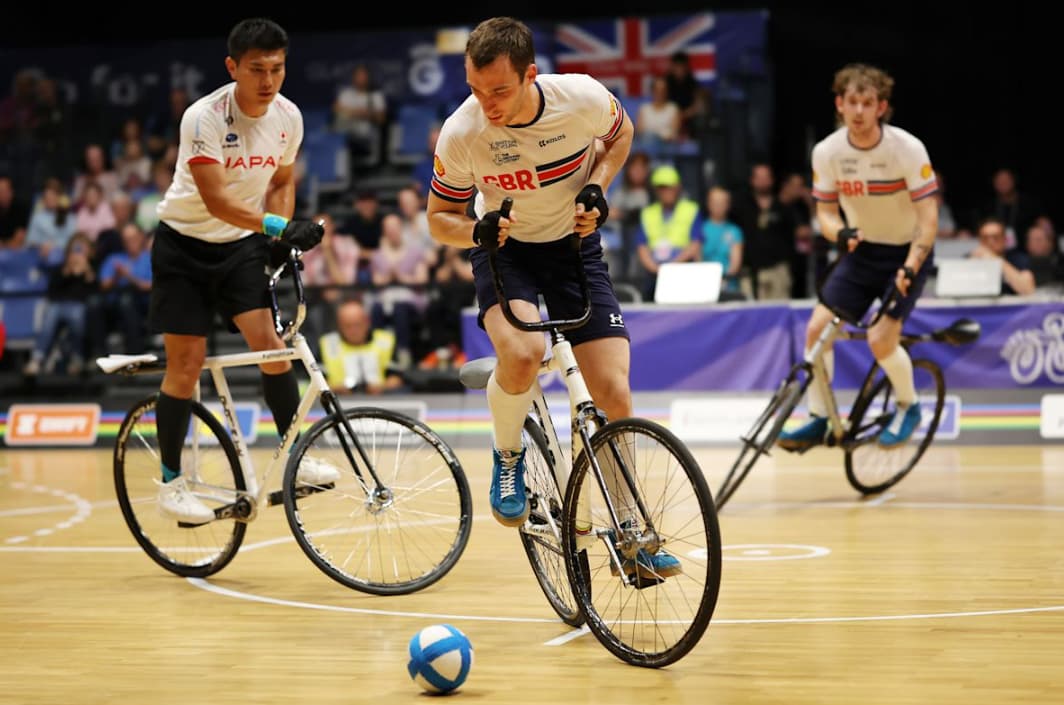
Also known as Radball in German-speaking countries, cycleball is essentially football played on fixed-gear bicycles without brakes.
Players control, pass, and shoot the ball using their bikes rather than their feet, requiring exceptional balance, coordination, and bike-handling skills.
Teams typically consist of 2 players competing on an indoor court similar to a gymnasium.
The bicycles used are specially designed with fixed gears, no brakes, and angled handlebars to allow players to maneuver the ball.
What makes cycleball weird is watching players perform the equivalent of bicycle acrobatics while maintaining competitive team strategy.
Players must stay mounted on their bikes at all times, making saves, passes, and shots incredibly difficult.
The sport has been around since 1893 and has a dedicated following in Europe, particularly Germany, Switzerland, and Belgium.
Cycleball even has world championships recognized by the International Cycling Union.
Despite its obscurity elsewhere, the sport demonstrates genuine athleticism and coordination that looks absolutely bizarre to first-time viewers.
Extreme Ironing

Extreme ironing takes the mundane household chore and transforms it into an absurdist adventure sport.
The concept is simple: take an ironing board and iron to remote, dangerous, or unusual locations, iron an item of clothing, and photograph the achievement.
Practitioners have ironed on mountain peaks, underwater while scuba diving, in the middle of motorways, while skydiving, on top of moving vehicles, and balanced on rock climbing walls.
The sport was invented in England in 1997 when Phil Shaw decided to combine his love of rock climbing with his dislike of ironing.
What makes extreme ironing weird is the complete absurdity of the premise – ironing serves no purpose in extreme environments, which is precisely the point.
It’s performance art disguised as sport, a rebellion against taking athletics too seriously.
Despite the joke origins, extreme ironing has developed a global community with competitions judged on the extremeness of location, quality of ironing, and creativity.
The World Extreme Ironing Championships have been held multiple times, with teams competing in various extreme ironing disciplines.
Giant Pumpkin Kayaking

Giant pumpkin kayaking involves hollowing out massive pumpkins (some weighing over 1,000 pounds), climbing inside, and paddling them like boats.
The most famous event is the Windsor Pumpkin Regatta held annually on Lake Pesaquid in Nova Scotia, Canada.
The course spans half a mile, and competitors often decorate their pumpkin vessels with paint, flags, and creative designs.
What makes this sport weird is the impracticality of pumpkins as watercraft – they’re unstable, difficult to steer, and liable to take on water if not properly sealed.
Paddlers must develop special techniques to propel and balance their orange vessels effectively.
The event attracts hundreds of spectators who come to watch the absurd spectacle of people racing in giant vegetables.
Some competitors take it seriously, crafting streamlined pumpkins and practicing paddling techniques, while others embrace the chaos and comedy.
The sport celebrates agricultural abundance, creativity, and the Canadian sense of humor.
Winners receive trophies and bragging rights, but mostly everyone just enjoys the ridiculous fun of turning produce into boats.
Mud-Pit Belly Flop

The Mud-Pit Belly Flop is one of the signature events of the Redneck Games, a satirical sporting event held in Georgia, USA.
The rules are beautifully simple: competitors run and belly flop into a massive pit of mud, attempting to create the biggest, muddiest, most spectacular splash possible.
There’s no objective scoring system – winners are chosen by crowd applause and judges’ subjective assessment of splash quality, entertainment value, and commitment to the flop.
What makes this weird is the complete lack of conventional athletic skill required.
Unlike most sports, where technique and training matter, the mud-pit belly flop rewards fearlessness, showmanship, and the willingness to get absolutely covered in mud.
Competitors often perform elaborate run-ups, dramatic leaps, and theatrical landing styles.
The winner receives a trophy featuring a crushed beer can, perfectly embodying the spirit of the event.
It’s weird sports at their purest – no pretense, no serious competition, just people having ridiculous fun doing something completely pointless and strangely entertaining.
Outhouse Racing

Outhouse racing transforms outdoor toilets into wheeled racing vehicles. Competitors attach wheels, brakes, and steering systems to outhouses, then race them downhill with someone sitting on the toilet seat inside.
Teams often decorate their outhouses with clever names like “Royal Flush,” “The Throne Ranger,” or “Game of Thrones.”
The sport requires engineering skills to build a stable, steerable outhouse-mobile, plus courage from the rider who must trust their construction while barreling downhill.
Races often feature multiple outhouses competing simultaneously, with crashes and rollovers adding to the chaotic entertainment.
What makes outhouse racing weird is taking something associated with privacy and bodily functions and turning it into a public spectacle and competition.
Events are held at various festivals across North America, often as fundraisers or tourist attractions.
The sport combines creativity, engineering, and slapstick humor into races that are as entertaining for spectators as they are ridiculous for participants.
Winners get trophies, but everyone walks away with stories and probably some bruises.
Parkour
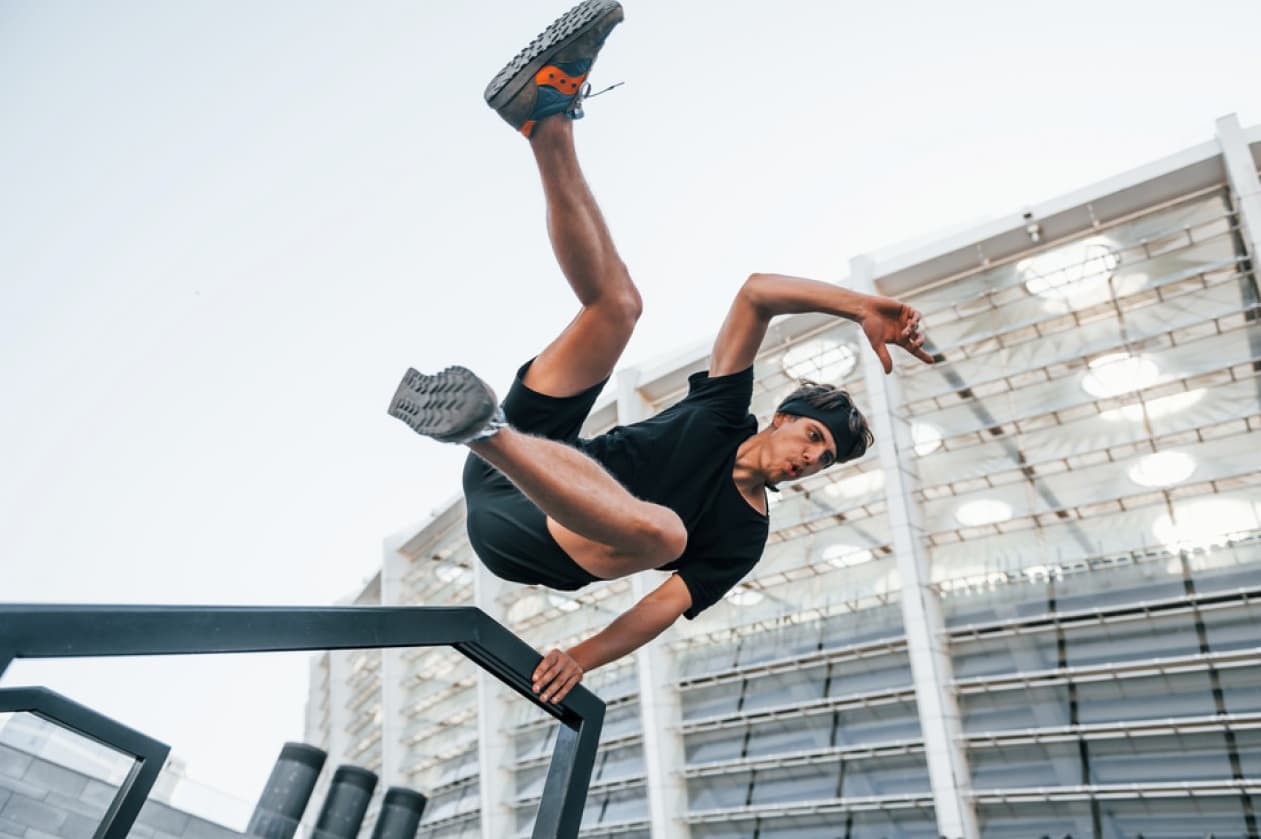
Parkour is the art of moving through environments efficiently using running, jumping, vaulting, climbing, rolling, and swinging techniques.
Originating from military obstacle course training in France, parkour has evolved into a global movement practiced in urban and natural environments.
Practitioners called traceurs aim to get from point A to point B as quickly and efficiently as possible without specialized equipment.
What makes parkour weird compared to traditional sports is its lack of competition, rules, or standardized venues.
It’s more philosophy than sport, emphasizing personal growth, overcoming fear, and creative problem-solving.
Traceurs see cities as playgrounds, vaulting railings, scaling walls, and leaping between buildings in ways that look dangerous and superhuman to observers.
The sport requires exceptional strength, agility, spatial awareness, and mental focus.
While competitive parkour events now exist, the core community emphasizes individual progression over winning.
Parkour has influenced action movies, video games, and mainstream fitness culture, proving that weird sports can reshape how we interact with physical space.
Quidditch

Quidditch was invented by J.K. Rowling in her Harry Potter series as a fictional wizarding sport played on flying broomsticks.
In 2005, students at Middlebury College in Vermont adapted it for real-world play, and it has since become a legitimate sport with international governing bodies.
Players run with broomsticks between their legs at all times, creating the comically weird sight of adults sprinting around with sticks.
Teams of seven players use four balls: one quaffle (volleyball) for scoring, three bludgers (dodgeballs) for disrupting play, and one snitch (a tennis ball in a sock attached to a neutral runner).
The seeker’s role is catching the snitch, worth significant points, and ending the game. What makes real-world Quidditch weird is adapting a magical fantasy sport to physical reality.
Despite looking ridiculous, Quidditch is surprisingly athletic, combining elements of rugby, dodgeball, and tag.
The sport has thousands of players across universities and community teams worldwide, with World Cups drawing international competitors.
It’s a testament to fandom culture and proves that weird sports can emerge from pure imagination.
Running of the Bulls
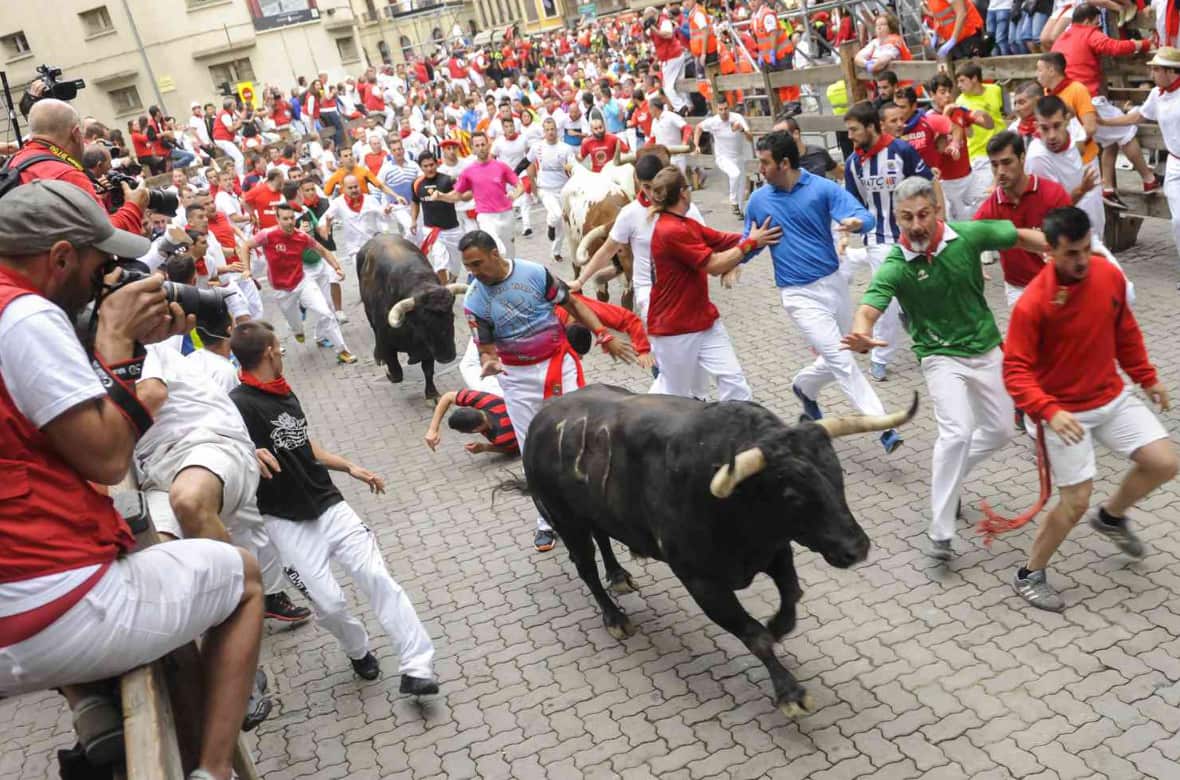
The Running of the Bulls, held every July during the San Fermín festival in Pamplona, Spain, is one of the world’s most dangerous traditional events.
Participants run ahead of six bulls released into the town’s narrow cobblestone streets along an 875-meter course leading to the bullring.
What makes this weird is the complete lack of safety measures or competitive scoring – there’s no winner, no prize, just tradition, adrenaline, and significant risk.
Every year, between 50-100 injuries are reported, ranging from minor to life-threatening, with 15 deaths recorded since 1910.
Runners are frequently trampled, gored, or crushed against walls. Despite the danger, thousands of people participate annually, motivated by tradition, thrill-seeking, or proving courage.
The event attracts international participants and tourists, though it faces criticism from animal rights activists.
What keeps it weird is the combination of centuries-old cultural tradition with modern tourism spectacle, creating a chaotic event where danger is the entire point.
It’s a ritual that seems irrational to outsiders but holds deep cultural significance for locals.
Snail Racing
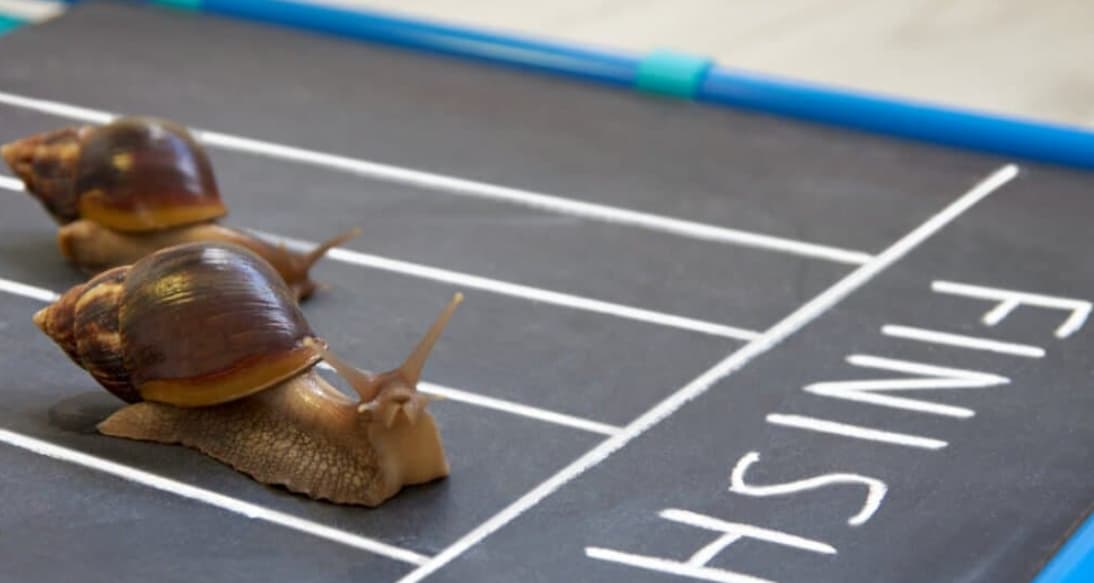
Snail racing involves ordinary garden snails competing on a circular track, typically 13-14 inches in diameter.
Snails start at the center and race toward the perimeter, with the first snail crossing the outer circle declared the winner.
Racing numbers or colored stickers are placed on shells to distinguish competitors.
Events are held worldwide, with the World Snail Racing Championships hosted annually in Congham, England, since the 1960s.
What makes snail racing weird is the extreme patience required – races can take several minutes, and watching snails move is hardly thrilling action.
Yet competitions draw crowds, often accompanied by festival atmospheres with food, entertainment, and betting.
Trainers sometimes use lettuce or other treats to motivate their snails, though success is largely unpredictable.
Sophie Smith of England set a record in 2009 by charming 567 worms in the related sport of worm charming.
Snail racing embodies the British tradition of turning absolutely anything into a competition, no matter how slow or mundane.
It’s weird precisely because it takes something boring and treats it with the seriousness of championship sport.
Toe Wrestling

Toe wrestling is exactly like arm wrestling or thumb wrestling, but using toes. Two competitors remove shoes and socks, lock toes, and attempt to pin their opponent’s foot to the ground for three seconds.
Matches are typically best of three rounds, alternating which foot is used. The sport was invented in a pub in Wetton, Staffordshire, England, in 1976 when drinkers wanted to create a sport where Britain could claim world dominance.
Competitors must keep their buttocks on the ground during matches, using only leg and foot strength.
What makes toe wrestling weird is the intimate absurdity of two adults intensely struggling with interlocked bare feet while maintaining serious competitive faces.
The World Toe Wrestling Championship is held annually at Ye Olde Royal Oak Inn, attracting competitors who train specifically for toe strength and flexibility.
Winners receive trophies and the title of World Toe Wrestling Champion. Injuries are rare but do occur, including sprained toes and pulled muscles.
The sport perfectly captures the eccentric British tradition of inventing bizarre competitions and treating them with genuine athletic seriousness.
Underwater Football

Underwater football is played at the bottom of a swimming pool using snorkeling equipment and a slightly weighted ball designed to sink.
Two teams compete to move the ball into goals positioned at opposite ends of the pool bottom.
Players must hold their breath while pushing, passing, or swimming with the ball, surfacing periodically for air.
What makes underwater football weird is the complete lack of the speed and fluidity of regular football – movements are slow, heavy, and require constant breath management.
Players develop specialized techniques for underwater mobility, ball control, and teamwork.
The sport requires exceptional lung capacity, swimming skills, and three-dimensional spatial awareness since movement occurs in all directions, including up and down.
Some variations use pool toy torpedoes instead of balls and different goal configurations.
Underwater football has dedicated communities in Europe and North America, with clubs hosting regular matches and tournaments.
It’s weird because it takes a familiar sport and strips away everything that makes it recognizable, creating something entirely new and strange.
Underwater Hockey
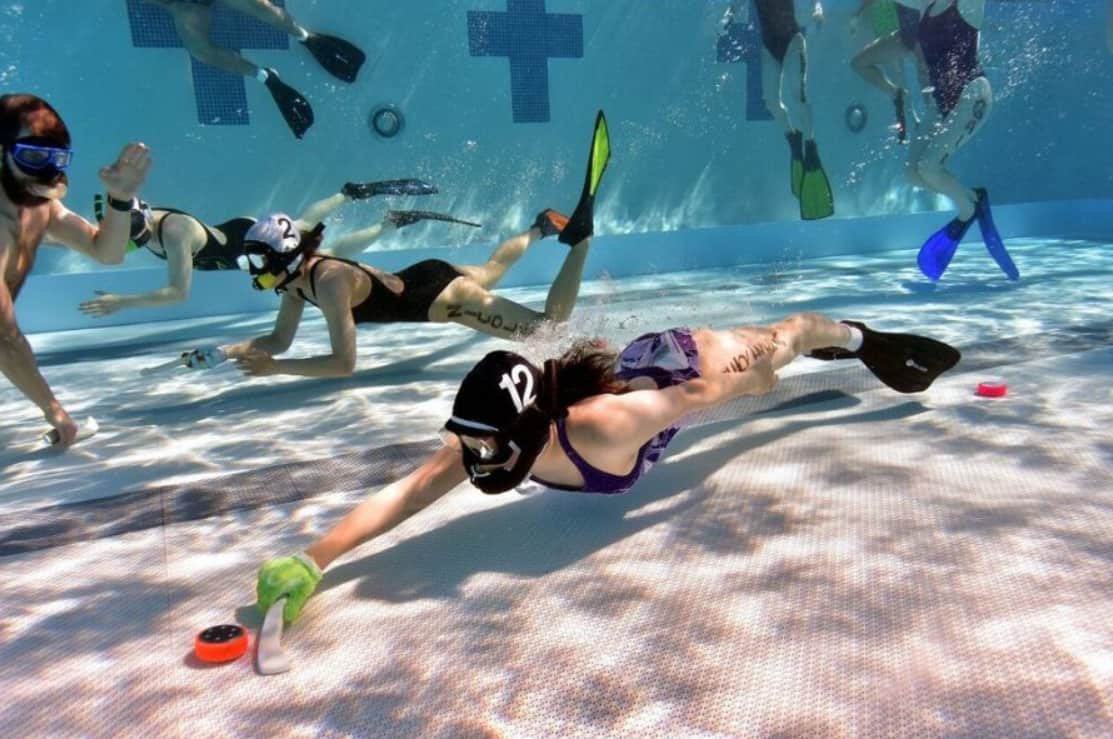
Underwater hockey, also called Octopush, is played at the bottom of swimming pools using short sticks (pushers) and a heavy puck.
Teams of up to 10 players wear masks, snorkels, and fins, attempting to push the puck across the pool bottom into the opposing team’s goal.
Players must hold their breath while playing, surfacing frequently for air, creating a constant flow of players diving down, engaging briefly, then returning to the surface.
What makes underwater hockey weird is the complete silence and slow-motion quality of play. There’s no shouting, no crowd noise, just the muffled sounds of water.
Strategy involves coordinating with teammates without verbal communication, using hand signals and practiced patterns.
The sport requires intense cardiovascular fitness, strong swimming ability, and unique stick-handling skills adapted for water resistance.
Underwater hockey has a surprisingly large international following, with world championships organized by CMAS (World Underwater Federation).
Players develop specialized equipment, including protective gloves and specific fin types.
It’s a legitimate competitive sport that looks absolutely bizarre to spectators watching through pool windows or underwater cameras.
Underwater Rugby

Underwater rugby combines elements of rugby and basketball in a swimming pool, with both teams attempting to score by placing a weighted saltwater-filled ball into goals positioned at opposite ends of the pool bottom.
The ball is negatively buoyant, meaning it sinks, and can only travel about 2-3 meters when passed underwater.
Teams wear snorkeling gear and play in three dimensions – players can attack from above, below, or any horizontal angle.
What makes underwater rugby weird is the complete disorientation of watching or playing a game where there’s no consistent “up” or ground reference.
Players must constantly manage breath, positioning, and ball control simultaneously. Matches are physically exhausting since swimming requires more energy than running, and holding breath adds additional challenge.
The sport was invented in Germany in the 1960s and has spread across Europe, South America, and Asia. World championships feature national teams competing with remarkable skill and tactics.
Underwater rugby is weird because it takes a collision sport like rugby and transforms it into a strange, slow-motion underwater ballet that somehow remains intensely competitive.
Unicycle Basketball

Unicycle basketball is exactly what it sounds like – regulation basketball played while riding unicycles.
The same rules apply as traditional basketball: dribbling, passing, shooting, and defending, but all while maintaining balance on one wheel.
Players must have both feet on the unicycle pedals at all times, adding extraordinary difficulty to every movement.
What makes unicycle basketball weird is the sheer impracticality – unicycles are inherently unstable, making dribbling nearly impossible and shooting a significant challenge.
Players develop specialized techniques for mounting, dismounting, and controlling unicycles while maintaining possession.
The sport requires exceptional balance, coordination, and bike-handling skills on top of basketball fundamentals.
Games are played on regulation courts using standard hoops and balls, with competitive leagues and tournaments held primarily in North America.
Unicycle basketball players often come from circus backgrounds or extreme unicycling communities.
The sport perfectly exemplifies the weird sports philosophy: take something difficult, add unnecessary complications, and create a new challenge that looks absolutely absurd but requires genuine skill.
Unicycle Hockey
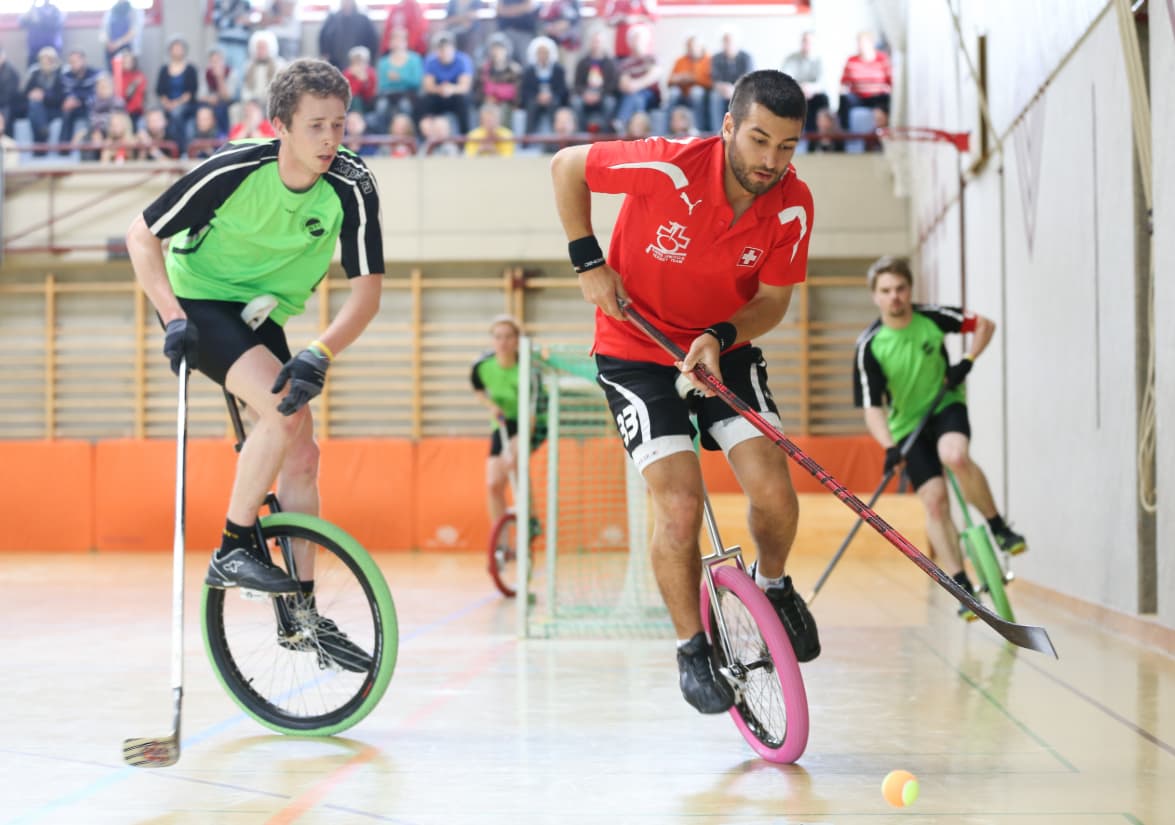
Unicycle hockey combines ice hockey rules with unicycle riding, creating a sport that’s unexpectedly fast-paced and competitive.
Five players per team ride 24-inch unicycles, using standard ice hockey sticks and tennis balls instead of pucks.
Players must keep both feet on the unicycle pedals at all times, with falling or dismounting stopping play.
What makes unicycle hockey weird is the constant balancing act while stick-handling, passing, shooting, and defending.
Unlike unicycle basketball, where you can occasionally stop, hockey requires continuous movement and quick changes in direction while maintaining balance.
The sport has dedicated leagues in Australia, Switzerland, Germany, the UK, and the USA, with international tournaments showcasing remarkable skill levels.
Players develop techniques for one-handed riding while controlling their sticks, using body position to steer while occupied with gameplay.
Unicycle hockey is weird because it looks like it should be impossible – balancing on one wheel while playing a fast-paced team sport defies logic.
Yet skilled players move with surprising speed and agility, proving humans can adapt to almost any sporting challenge.
Unicycle Polo
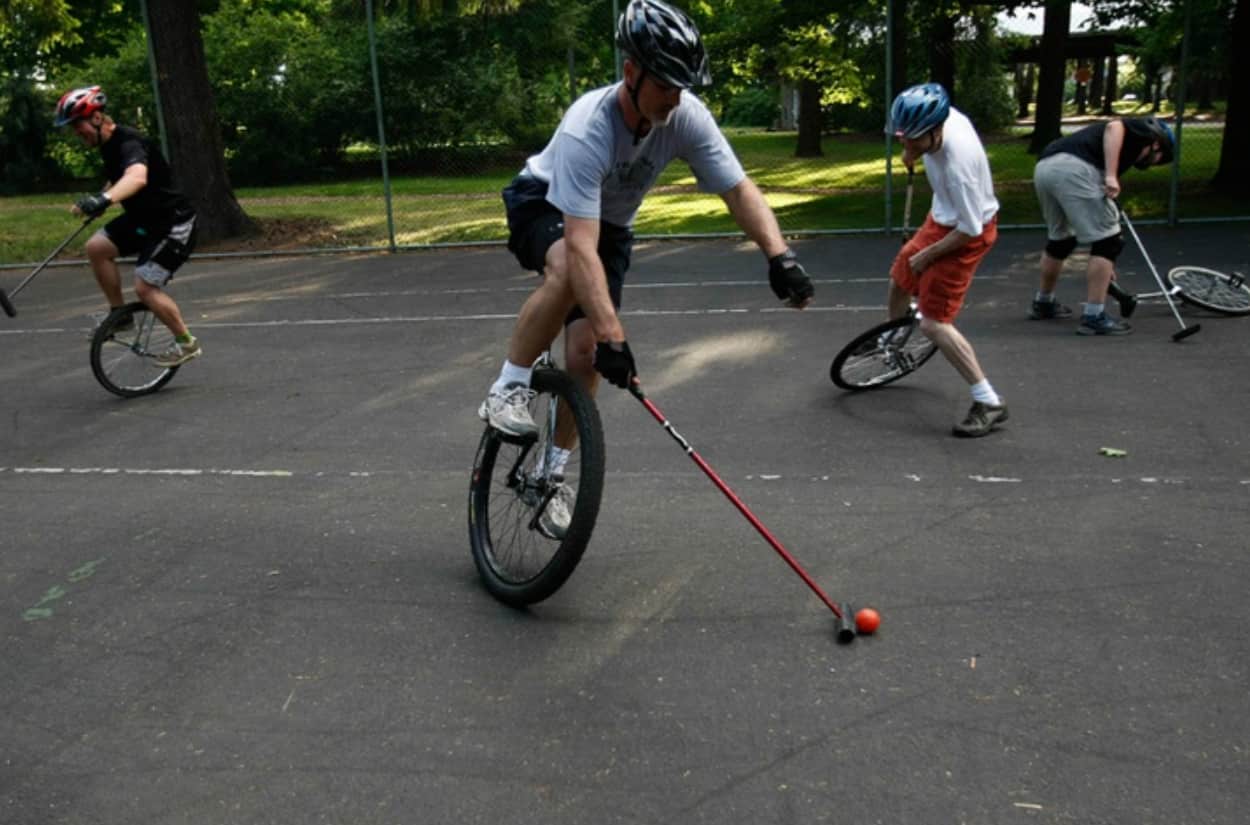
Unicycle polo replaces horses with unicycles in this adaptation of traditional polo.
Players ride unicycles while wielding long-handled mallets, attempting to hit a ball into the opposing team’s goal.
The sport follows similar rules to regular polo, including field dimensions, scoring, and basic gameplay, but the challenge of maintaining unicycle balance while swinging a mallet creates entirely new dimensions of difficulty.
What makes unicycle polo weird is the absurd visual of adults on unicycles playing a sport historically associated with wealthy equestrians.
Players must develop exceptional unicycle skills, including one-handed riding, quick direction changes, and maintaining balance during mallet swings.
The sport requires custom equipment, including sturdy unicycles capable of withstanding the lateral forces of polo gameplay.
Unicycle polo has niche communities primarily in North America and Europe, with enthusiasts gathering for pickup games and occasional tournaments.
The sport demonstrates that virtually any activity can be adapted to unicycles if you’re dedicated and slightly crazy enough to try. It’s weird sports at their most creatively absurd.
Wife Carrying

Wife carrying originated in Finland and has become an international sport with world championships attracting competitors globally.
Male competitors race through a 253.5-meter obstacle course consisting of two dry obstacles and one water obstacle about 1 meter deep, all while carrying a female teammate who must weigh at least 49kg (108 pounds), or additional weight is added.
Various carrying styles have evolved, including piggyback, fireman’s carry, and the popular Estonian-style carry, where the woman hangs upside-down on the man’s back with her legs over his shoulders.
What makes wife carrying weird is its origins in either 19th-century Finnish steeplechase traditions or possibly the practice of stealing women from neighboring villages.
The modern sport combines strength, speed, and partnership coordination, with teams training together to develop efficient carrying techniques and trust.
Winners traditionally receive the wife’s weight in beer, making it one of the few sports where winning literally makes you heavier.
The sport has spread worldwide with national and continental championships.
Despite the name, female teammates don’t need to be wives – many competitive teams pair male runners with small, athletic female partners for speed advantages.
Wood Chopping
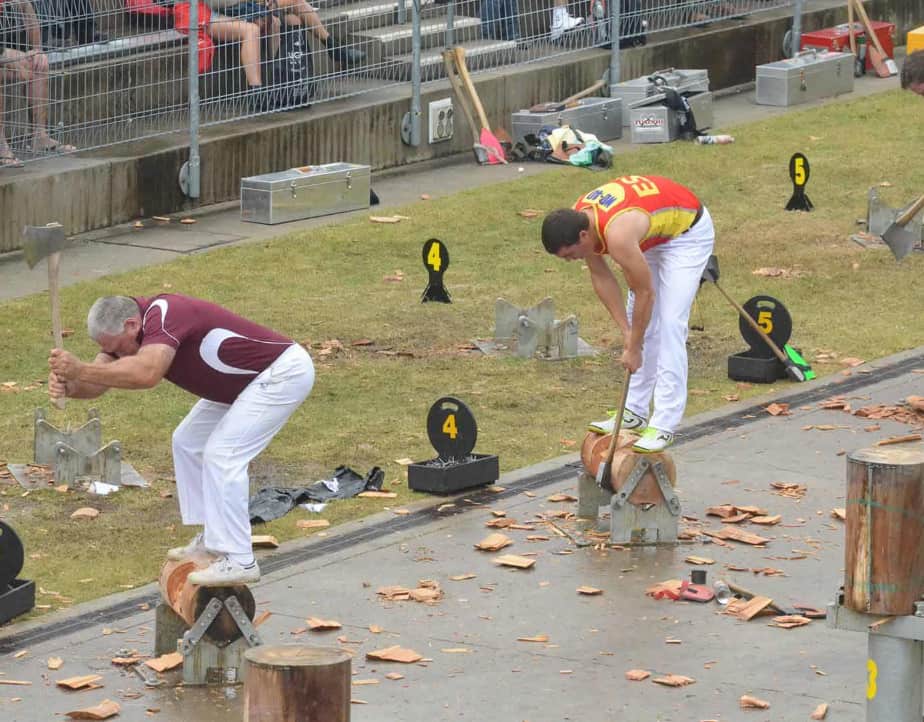
Wood chopping competitions test athletes’ speed, power, and technique in cutting through logs and blocks of wood using axes and saws.
Events include standing block chop, underhand chop, tree felling, and various sawing disciplines.
Competitors called “axemen” or “axewomen” must combine brute strength with precision technique to cut through wood as quickly as possible.
What makes wood chopping weird is turning a practical logging skill into intense athletic competition, complete with professional circuits, sponsorships, and world championships.
The sport has been around since 1870 and remains particularly popular in Australia, New Zealand, and the United States.
Top competitors can chop through a 12-inch wooden block in under 20 seconds.
Athletes train extensively, developing specialized axes with razor-sharp edges and perfecting swing techniques for maximum efficiency.
Wood chopping demonstrates impressive power and skill, yet it looks strange to modern audiences unfamiliar with logging culture.
The sport preserves historical skills while providing genuine athletic competition that’s visually dramatic and accessible to spectators who appreciate raw physical ability.
Worm Charming

Worm charming is a competitive sport where participants attempt to coax earthworms out of the ground within a designated plot of land during a set time period.
Competitors use various techniques, including tapping, vibrations, music, and mysterious methods passed down through generations.
The competitor who charms the most worms wins. World records are seriously contested, with Sophie Smith of England setting a remarkable record in 2009 by charming 567 worms.
What makes worm charming weird is the complete unpredictability and the absurdity of humans intensely focused on persuading worms to surface.
The sport requires patience, technique, and perhaps a bit of worm psychology.
Annual worm charming championships are held in various locations, primarily in England, with the World Worm Charming Championships hosted in Cheshire.
The sport has a scientific basis – worms surface when they detect vibrations resembling rain or predators like moles digging.
Some competitors use garden forks tapped rhythmically into the soil, while others use more creative approaches.
Worm charming perfectly captures the British tradition of turning anything, no matter how mundane, into a competitive sport with rules, records, and championships.
Zorbing
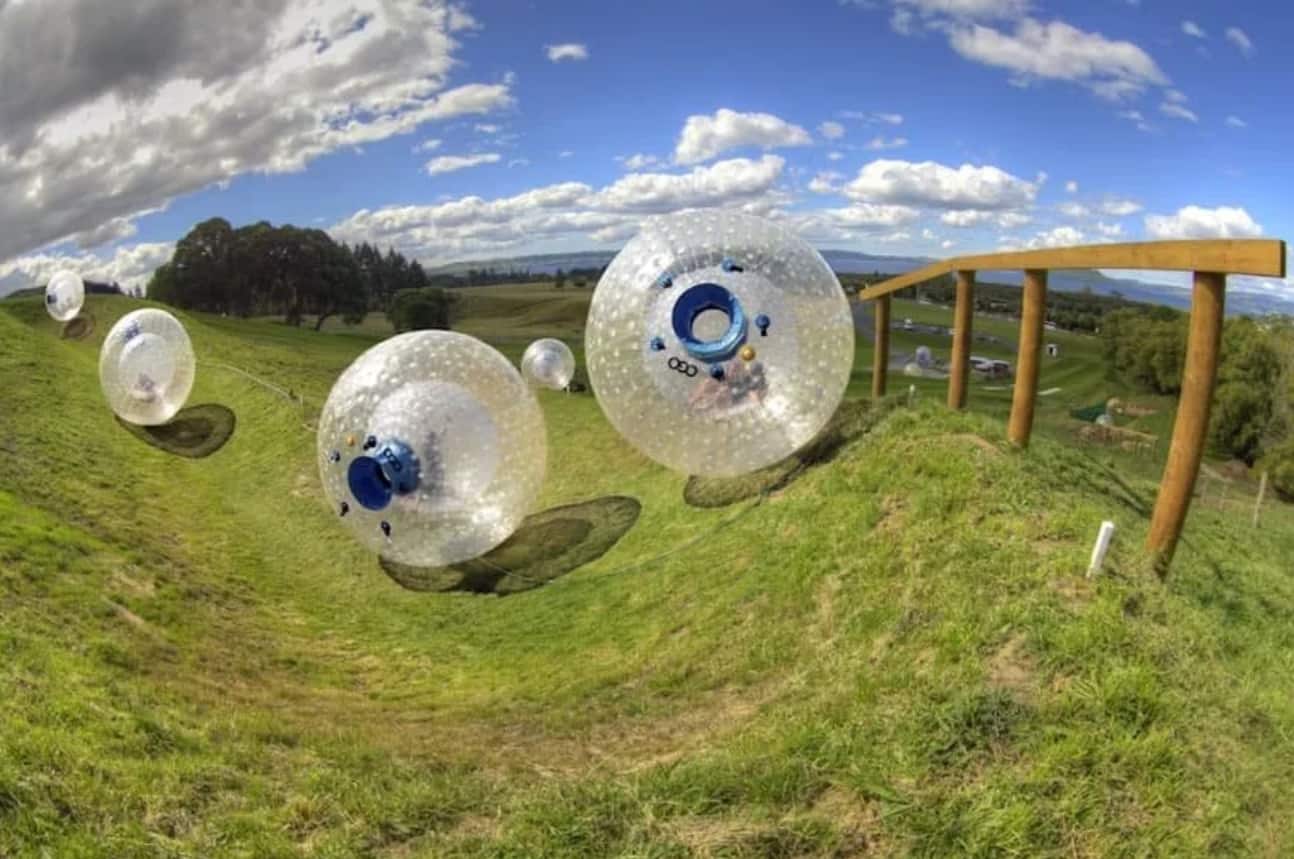
Zorbing involves climbing inside a giant transparent plastic orb (essentially a human hamster ball) and rolling down hills, across water, or on flat surfaces.
The orb consists of two spheres, one inside the other, with an air cushion between, providing protection.
Harness zorbing secures riders for more controlled rolling, while harness-free zorbing allows riders to tumble freely inside, creating a disorienting experience.
What makes zorbing weird is the complete sensory confusion of rolling in multiple directions with no control over orientation.
The sport was invented in New Zealand in the 1990s and quickly became a tourist attraction.
Zorbing has evolved to include variations like hydro zorbing (with water inside the ball) and zorbing on water surfaces.
The experience is simultaneously thrilling and nauseating, with some people loving the rush while others become motion sick.
Zorbing requires no athletic skill – you simply climb in and let gravity take over.
It’s weird because humans have essentially recreated the experience of being a hamster in a ball, finding joy in controlled chaos and temporary disorientation.
The sport represents pure recreational fun without competitive elements or a practical purpose.
Shin Kicking

Shin kicking is an English martial art and combat sport where two competitors hold each other by the shoulders and attempt to kick each other’s shins until one person falls to the ground.
The sport has roots dating back to the 17th century and was once part of the Cotswold Olimpick Games.
What makes shin kicking weird is the simplicity and obvious pain involved – there’s no complex technique, just two people deliberately hurting each other’s legs until someone can’t stand anymore.
Competitors traditionally stuff straw down their trouser legs for padding, though this provides only modest protection.
Matches are supervised by referees called “sticklers” who ensure fair play and determine when competitors have fallen.
The sport requires high pain tolerance, strong legs, and determination to outlast your opponent’s ability to withstand pain.
Shin kicking championships are held annually in England, attracting brave competitors and fascinated spectators.
It’s weird because most sports involve skillful competition, but shin kicking is essentially organized mutual assault.
The sport’s survival demonstrates how traditional weird sports maintain cultural relevance through sheer eccentricity and local pride.
Bubble Football

Bubble football, also called bubble soccer or zorb football, involves playing football while encased from head to knees in transparent inflatable bubbles.
Players can run, kick the ball, and most entertainingly, bump into each other, sending opponents bouncing and rolling dramatically.
What makes bubble football weird is the complete transformation of the sport’s dynamics – collisions become the highlight rather than something to avoid, and players spend as much time on their backs helplessly flailing inside bubbles as they do actually playing football.
The sport originated in Norway and quickly spread globally, popular for parties, corporate events, and recreational leagues.
Bubble football requires less skill than regular football but significantly more stamina since the bubbles add weight and restrict movement.
Players frequently end up laughing too hard to continue playing effectively.
It’s weird because the bubbles fundamentally change football from a game of finesse to one of controlled chaos and comedy.
Bubble football proves that adding inflatable plastic to any sport makes it automatically more ridiculous and usually more fun.
Ferret Legging

Ferret legging is perhaps one of the most bizarre and uncomfortable sports ever invented.
Competitors place live ferrets inside their trousers (with no underwear for protection), tie the trouser bottoms at the ankles, and cinch the belt tight at the waist, trapping the ferrets.
The competitor who keeps the ferrets trapped longest wins. The ferrets, understandably distressed by their confinement, bite, scratch, and claw to escape, causing significant pain.
What makes ferret legging weird is the complete absence of logic – there’s no reasonable explanation for why anyone would voluntarily subject themselves to having panicked ferrets trapped in their pants.
Records reportedly exceed five hours, though the veracity of such claims is questionable.
The sport originated among Yorkshire coal miners in England, possibly as a test of courage, pain tolerance, or simply a pub bet gone too far.
Ferret legging has been banned or restricted in various places due to animal welfare concerns.
It represents weird sports at their most extreme and inexplicable, showcasing human capacity for inventing uncomfortable competitions that serve absolutely no practical purpose.
Camel Wrestling
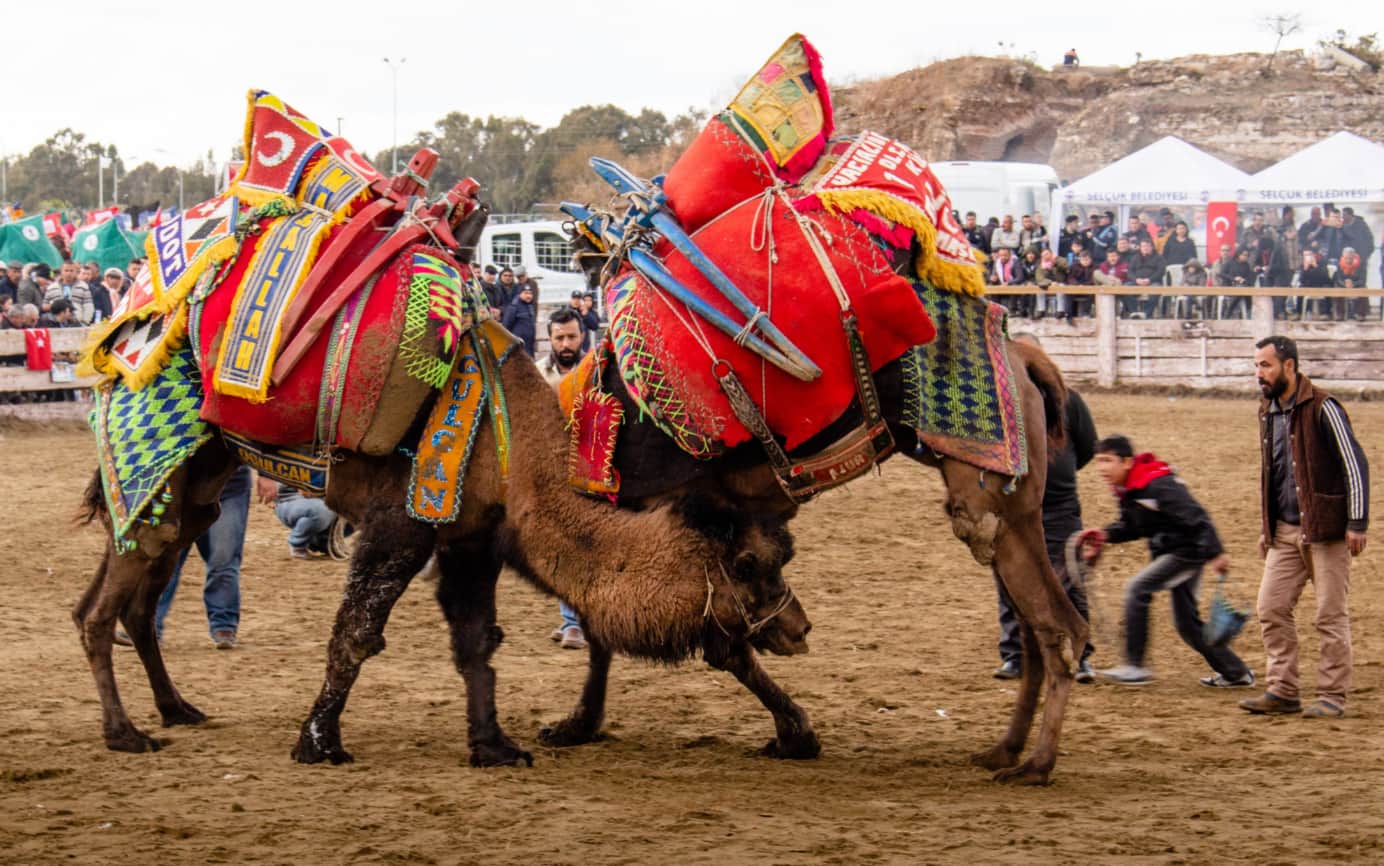
Camel wrestling is a traditional Turkish sport where two male camels fight for dominance, usually during breeding season when they’re naturally aggressive.
The camels are specially bred for wrestling and can weigh over 1,000 pounds.
Matches occur in sand arenas with handlers attempting to control the camels using ropes.
What makes camel wrestling weird is watching massive animals engage in slow-motion battles of strength, pushing, leaning, and occasionally knocking each other down.
Unlike many combat sports, humans aren’t fighting – they’re spectators to natural animal behavior exploited for entertainment.
Matches can last from a few minutes to over half an hour, ending when one camel retreats or falls.
The sport faces criticism from animal rights advocates who argue it causes unnecessary stress and potential injury to camels.
Camel wrestling festivals attract thousands of spectators in Turkey, where they maintain cultural significance despite controversies.
It’s weird because it’s essentially organized animal fighting presented as a traditional sport and cultural heritage.
The sport demonstrates how weird sports often intersect with cultural traditions that may seem strange or problematic to outside observers.
Hornussen

Hornussen is a traditional Swiss sport combining elements of golf and baseball, played in open fields.
One team uses a flexible stick to launch a small puck (the hornuss) as far as possible, while the opposing team, spread across the field, attempts to block the puck’s flight using large wooden boards called “schindels.”
What makes Hornussen weird is the unusual equipment and the absurd sight of fielders frantically waving boards in the air, trying to intercept a small flying object.
The striking technique is unique, involving a whipping motion that can send the puck over 300 meters at high speeds.
Fielders must anticipate trajectory and position themselves strategically while handling unwieldy boards.
The sport has been played in Switzerland for centuries and maintains dedicated clubs and annual championships.
Hornussen requires strength, coordination, and teamwork, yet looks completely bizarre to anyone unfamiliar with Swiss sporting traditions.
The sport demonstrates how isolated geographic regions develop unique sports reflecting local culture and available materials.
Hornussen has remained relatively unknown internationally but maintains strong cultural significance in its homeland.
Pillow Fighting Championships

Competitive pillow fighting has evolved from childhood bedroom battles to an organized sport with official rules, weight classes, and championship tournaments.
Competitors typically fight on elevated platforms or beams, attempting to knock opponents off using pillows as weapons.
What makes professional pillow fighting weird is the juxtaposition of childhood nostalgia with serious competitive structure.
Organizations have developed formal rules regarding pillow specifications, striking techniques, and safety requirements.
Unlike playful pillow fights, competitive versions can be surprisingly physical and intense, with athletes training specifically for stamina, balance, and striking power.
Some versions incorporate elements of sumo wrestling, where the goal is to push opponents out of a ring.
Pillow fighting championships have been organized in multiple countries with varying rules.
The sport appeals to spectators who enjoy the absurd premise while appreciating the genuine skill and strategy involved.
It’s weird because it takes something associated with slumber parties and children’s play, adding competitive elements while maintaining the inherent silliness that makes pillow fighting entertaining.
Sepak Takraw
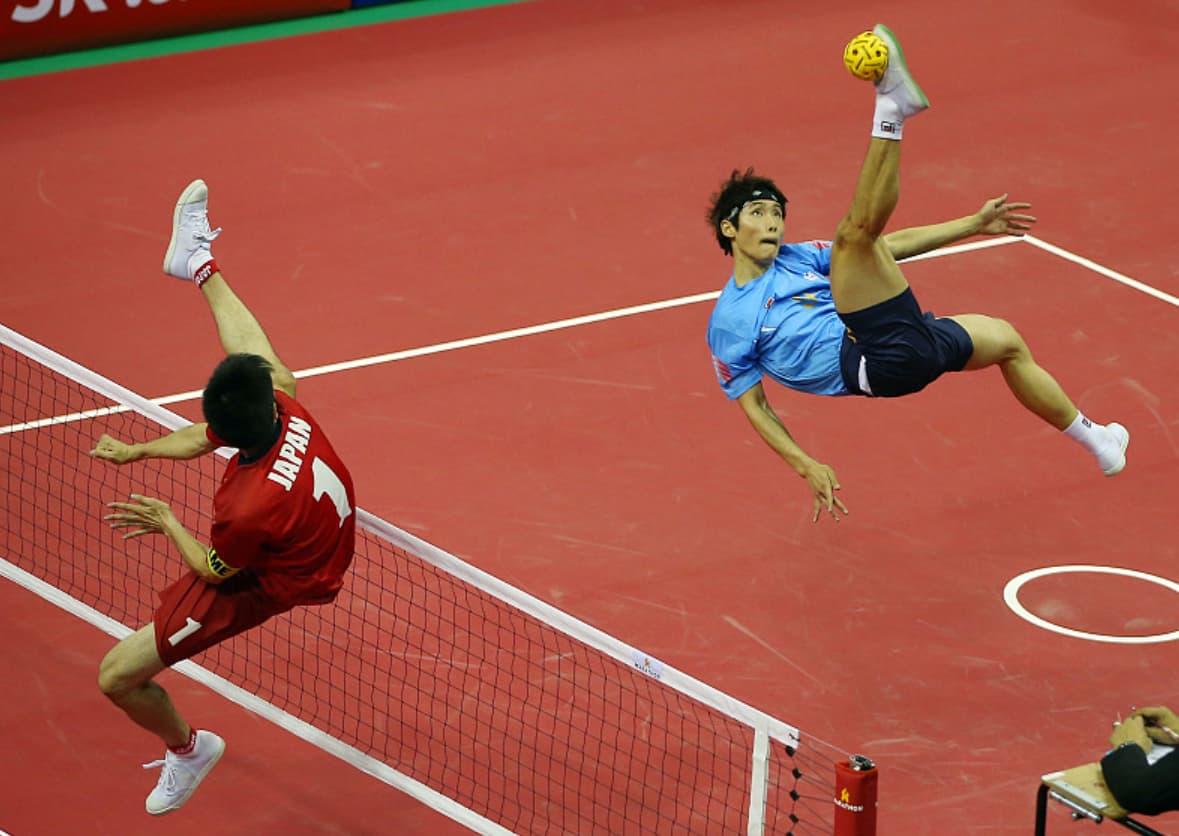
Sepak takraw is a traditional Southeast Asian sport resembling volleyball but played primarily with feet, knees, chest, and head – hands are not allowed.
Three players per team volley a rattan ball over a net, performing spectacular acrobatic kicks, including bicycle kicks, to keep the ball airborne and score points.
What makes sepak takraw weird to Western audiences is the incredible athleticism and aerial maneuvers involved, using only the lower body and torso.
Players leap high in the air, spinning and kicking with flexibility that seems superhuman. The rattan ball is harder than a volleyball and can reach dangerous speeds when spiked.
Sepak takraw has ancient origins and is hugely popular in Thailand, Malaysia, Indonesia, and throughout Southeast Asia.
The sport has international competitions and even Asian Games recognition. What seems weird to outsiders is completely normal and beloved in its home regions.
Sepak takraw demonstrates how sports considered mainstream in one culture can seem exotic and strange in another.
The spectacular acrobatics and unique rules make it genuinely impressive to watch once you understand the game.
Competitive Eating

Competitive eating involves consuming massive quantities of food as quickly as possible, with contests focusing on specific foods like hot dogs, hamburgers, chicken wings, or pies.
Professional eaters train to expand stomach capacity and develop efficient eating techniques.
What makes competitive eating weird is watching the physiological limits of human consumption pushed to extremes that seem unhealthy and potentially dangerous.
Top competitive eaters can consume 70+ hot dogs in 10 minutes or dozens of hamburgers in a single sitting.
The sport has professional circuits, particularly Major League Eating in the United States, with competitors earning prize money and sponsorships.
Famous events include the Nathan’s Hot Dog Eating Contest held annually on July 4th. Competitive eating faces criticism regarding health impacts and promoting unhealthy relationships with food.
It’s weird because eating is normally associated with pleasure and nourishment, but competitive eating transforms it into an endurance sport focused solely on quantity and speed.
The sport represents excess and spectacle, fascinating and disturbing audiences simultaneously. Competitive eating demonstrates human capacity to turn any activity, even one as fundamental as eating, into organized competition.
Fireball Soccer

Fireball soccer is played primarily in Indonesia, particularly during celebrations and festivals.
The game uses a coconut soaked in kerosene and set on fire, which players kick and pass like a regular football. Participants play barefoot, making the sport even more dangerous and impressive.
What makes fireball soccer weird and concerning is the obvious danger of playing with actual fire. Players develop techniques to minimize contact with flames, using quick kicks and avoiding prolonged touching.
Burns are common despite players’ skills. The sport has cultural significance related to courage, spiritual beliefs, and community bonding.
Fireball soccer demonstrates the human tendency to add unnecessary danger to activities, creating a spectacle that draws crowds and tests participants’ bravery.
The sport faces obvious safety concerns and criticism for promoting dangerous behavior, particularly involving children who sometimes participate.
It represents extreme, weird sports where the primary appeal is risk rather than skill or competition.
Fireball soccer shows how cultural traditions sometimes involve practices that seem irrational or reckless to outside observers.
The sport remains controversial even in its home regions due to injury risks.
Coal Carrying
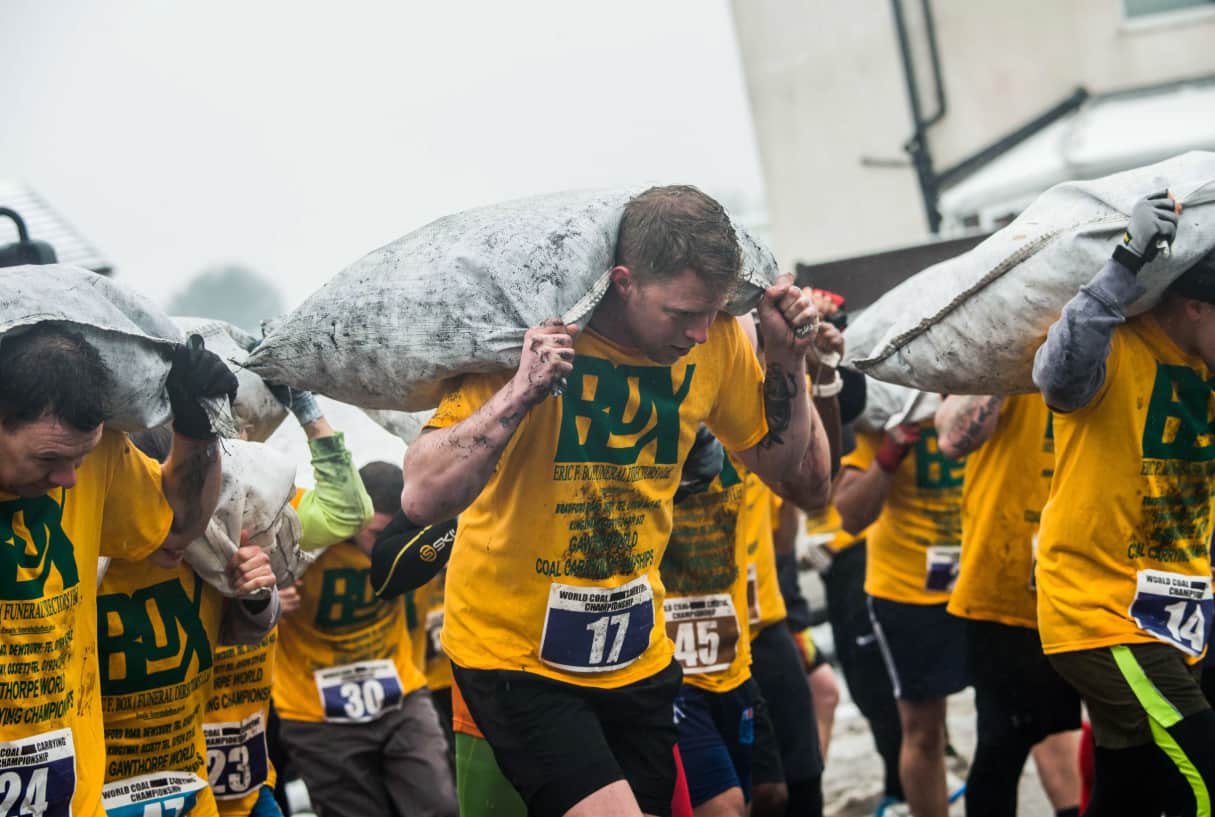
Coal carrying races involve competitors carrying heavy bags of coal over set distances as quickly as possible.
The most famous event is the World Coal Carrying Championship held annually in Gawthorpe, England, where male competitors carry 50kg (110 pounds) of coal over 1,012.5 meters while female competitors carry 20kg over the same distance.
What makes coal carrying weird is the complete lack of practical modern application – coal carrying was once an essential job, but turning it into a competitive sport celebrates obsolete labor.
The sport requires both speed and strength, as competitors must balance running quickly while managing heavy, awkward loads.
Coal bags are carried on shoulders, requiring core strength and balance to prevent dropping or shifting.
The sport originated in 1963 from a bet between pub patrons and has continued as an annual tradition.
Coal carrying represents working-class heritage and community identity in former coal mining regions.
It’s weird because few people today need to carry coal for any practical reason, yet races continue as a cultural celebration and a genuinely difficult physical challenge.
The sport demonstrates how labor can transform into sport when economic necessity disappears.
Haggis Hurling

Haggis hurling involves throwing a haggis (a traditional Scottish dish of sheep organs cooked in stomach lining) as far as possible.
Competitors are judged on distance achieved with the stipulation that the haggis must remain intact upon landing – burst haggis don’t count.
What makes haggis hurling weird is using food as sporting equipment and the serious rules applied to such a ridiculous activity.
The sport was invented relatively recently, possibly as a tourist attraction playing on Scottish stereotypes, though some claim older traditional roots.
Competitions are held at Highland Games and Scottish festivals worldwide. The technique involves proper grip on the slippery haggis and release angles to maximize distance while maintaining structural integrity.
World records are contested seriously despite the absurd premise. Haggis hurling represents Scottish humor and willingness to embrace and monetize cultural stereotypes.
It’s weird because it takes a traditional food, already considered unusual by many outside Scotland, and turns it into projectile sporting equipment.
The sport demonstrates how tourism and cultural marketing can generate new, weird sports that become traditions themselves.
Mosquito Killing

The World Mosquito Killing Championships take place annually in Finland, where competitors attempt to kill the most mosquitoes within a set time period using only their hands.
Finland’s northern regions have massive mosquito populations during the summer months, making mosquito hunting both a practical pest control and a competitive sport.
What makes mosquito killing weird is the formalization of something most people do naturally whenever mosquitoes are present.
Competitors develop techniques for attracting, tracking, and swatting mosquitoes efficiently, with final mosquito body counts determining winners.
The sport requires patience, quick reflexes, and a willingness to offer yourself as bait to attract targets.
Championships attract participants who view it as a celebration of Finnish summer challenges and country humor.
It’s weird because it creates formal competition around something normally considered an annoyance rather than a sport.
The sport demonstrates Finnish cultural attitude toward turning even frustrating aspects of life into opportunities for community gathering and lighthearted competition.
Mosquito killing championships acknowledge the reality that mosquitoes are an inevitable part of Finnish summer while providing a humorous competitive outlet.
Air Guitar Championships
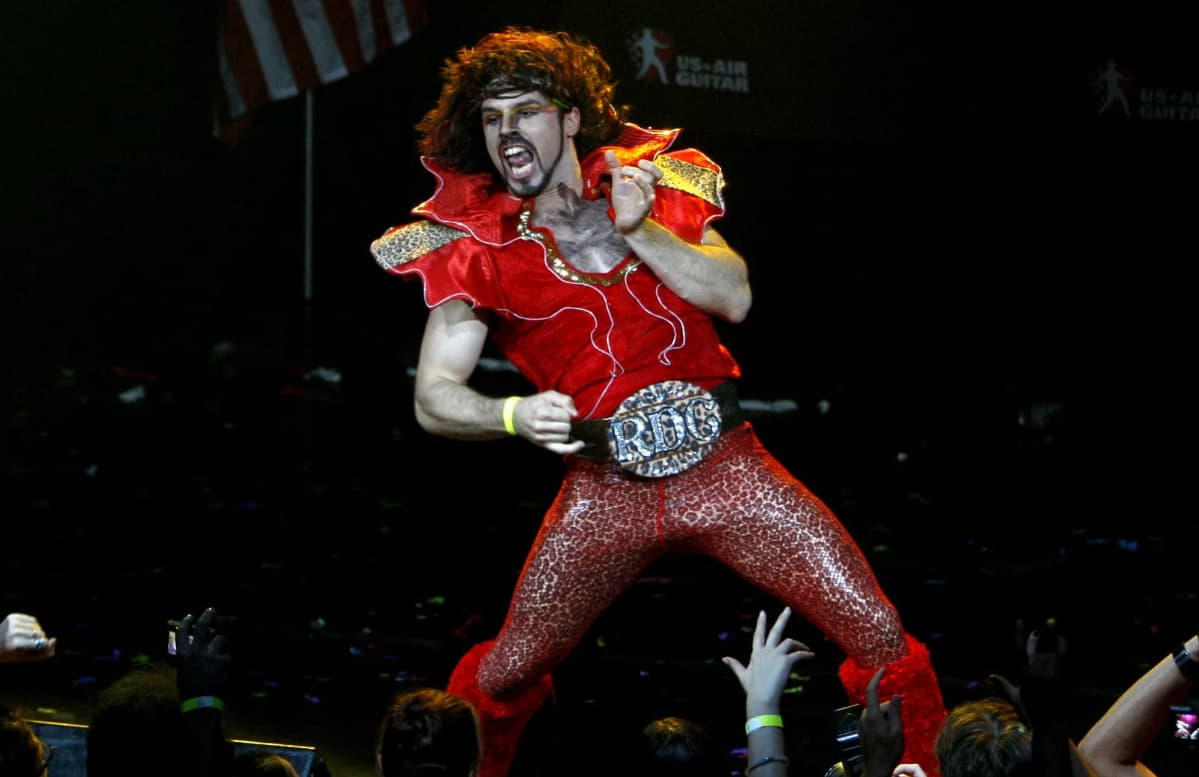
Air guitar competitions involve performers miming guitar playing without actual instruments, judged on technical skill, stage presence, and artistic merit.
The World Air Guitar Championships, held annually in Finland since 1996, attract competitors globally who develop elaborate routines combining imaginary guitar playing with performance art.
What makes air guitar weird is the complete absence of the primary element – the guitar.
Judges score based on performers’ ability to convincingly mime guitar techniques, their creativity, showmanship, and connection to music.
Top performers are genuinely talented entertainers who make audiences forget they’re not playing real instruments.
The sport has developed serious competitive structures with national qualifiers and world championship finals.
Air guitar represents pure performance art and the celebration of music appreciation beyond technical ability.
It’s weird because it’s consciously absurd yet treated with genuine competitive seriousness.
The sport demonstrates how mime and imagination can become legitimate competition when the community embraces the concept.
Air guitar championships prove you don’t need actual equipment or traditional athletic skills to create an entertaining and impressive sport.
Mobile Phone Throwing

Mobile phone throwing championships test who can throw old mobile phones the farthest, with categories for distance, accuracy, and creative throwing styles.
The sport originated in Finland in 2000 when locals wanted to comment on frustrations with mobile phone technology and obsolescence.
What makes mobile phone throwing weird is the deliberate destruction of technology for sport, symbolically rejecting digital device dependency.
Competitions use old, broken, or obsolete phones to avoid unnecessary waste. Techniques include traditional throwing styles adapted for the weight and aerodynamics of mobile phones.
The sport has spread internationally with world championships and national competitions.
Phone throwing represents frustration with technology, environmental concerns about electronic waste, and the cathartic pleasure of breaking things in controlled settings.
It’s weird because most sports involve preserving equipment, but phone throwing celebrates destruction.
The sport demonstrates how weird sports often contain social commentary and cultural critique hidden within absurdist premises.
Phone-throwing competitions attract participants who appreciate both the physical challenge and the symbolic meaning of hurling phones as far as possible.
Bed Racing
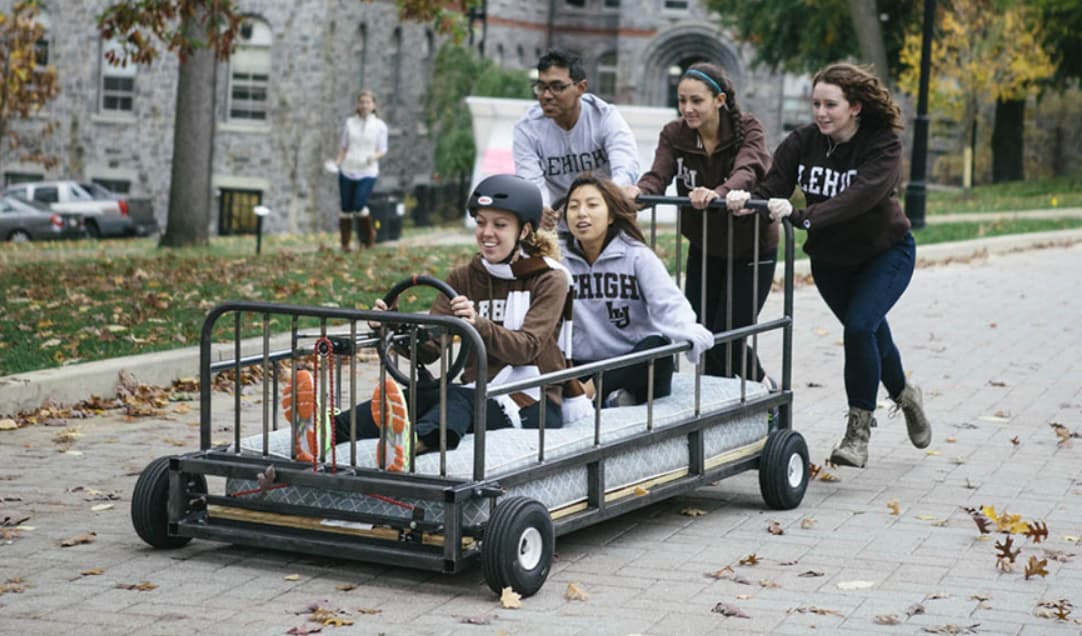
Bed racing involves attaching wheels, steering mechanisms, and sometimes motors to beds, then racing them through streets with one person riding on the mattress while team members push or pull.
Races often feature elaborate bed decorations and costumes, adding entertainment value.
What makes bed racing weird is transforming bedroom furniture into racing vehicles and the absurd visual of people riding beds at speed through public spaces.
Bed racing events are held in various countries as fundraisers, festival attractions, and community celebrations.
The sport requires engineering skills to create functional wheeled beds, plus teamwork for successful racing.
Crashes and rollovers are common, adding slapstick comedy to competitions.
Bed racing combines creativity, athletic exertion, and pure silliness into events that entertain both participants and spectators.
It’s weird because beds symbolize rest and sleep, yet bed racing represents frenetic activity and competition.
The sport demonstrates how turning everyday objects into sporting equipment creates immediate novelty and entertainment.
Bed racing has no practical purpose beyond fun, embodying the weird sports essence of finding joy in absurdity.
Ostrich Racing
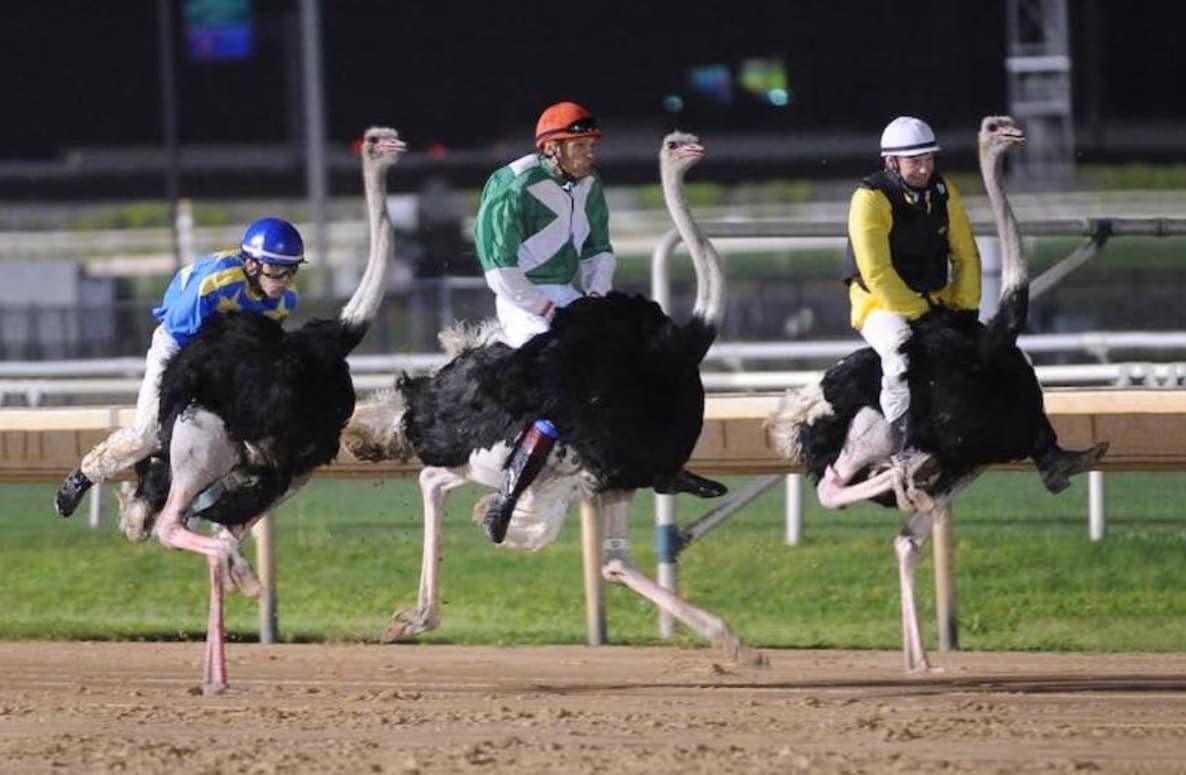
Ostrich racing involves jockeys mounting ostriches and racing them, similar to horse racing.
Ostriches can run over 40 mph, making races genuinely fast and thrilling.
What makes ostrich racing weird is the birds’ complete unpredictability compared to horses.
Ostriches frequently refuse to run, run in the wrong directions, or throw their riders unpredictably.
Jockeys must balance on birds’ backs without proper saddles, making staying mounted extremely difficult.
The sport has been practiced in South Africa, where ostrich farming is common, with exhibitions held at festivals and tourist attractions.
Ostrich racing faces animal welfare concerns regarding stress on birds and the appropriateness of using large birds as mounts.
It’s weird because ostriches are fundamentally unsuited as riding animals despite their impressive running abilities.
Unlike horses domesticated over millennia for riding, ostriches remain wild animals with unpredictable temperaments.
The sport demonstrates human tendency to try mounting and racing anything fast enough to be interesting.
Ostrich racing remains controversial but continues where regulations permit.
Gurning

Gurning, also called “gurnin’ through a braffin,” involves making the ugliest, most distorted facial expressions possible, often through a horse collar worn as a frame.
Competitors contort faces into grotesque expressions judged by audience applause or expert panels. What makes gurning weird is celebrating ugliness and facial distortion as a competitive skill.
The World Gurning Championship, held at the Egremont Crab Fair in England since 1267, is the most prestigious gurning event.
Successful gurners often have unusual dental situations or facial flexibility, allowing extreme expressions impossible for ordinary people.
The sport requires no physical fitness or traditional athletic ability, instead emphasizing willingness to look ridiculous and facial muscle control.
Gurning represents British humor and the tradition of celebrating the absurd and grotesque.
It’s weird because most competitions celebrate beauty, strength, or skill, but gurning celebrates making yourself as ugly as possible.
The sport has ancient roots, possibly related to mocking enemies or entertainment traditions.
Gurning demonstrates how any human capability, even making faces, can become a competitive sport when communities decide to create rules and championships.
Strangest Records in Weird Sports History
Weird sports produce some of the most bizarre and entertaining records in athletic history. These achievements represent human determination applied to the most ridiculous competitions imaginable.
- Fastest Cheese Roll: The record for cheese rolling is difficult to definitively establish because winners are determined by who reaches the bottom first, not by precise timing. However, the fastest recorded descent is under 12 seconds on a hill where the cheese itself reaches speeds near 70 mph. Most competitors take 20-30 seconds, assuming they don’t injure themselves.
- Most Dangerous Bull Run Year: The San Fermín festival’s Running of the Bulls has seen varying injury numbers, but 2013 was particularly dangerous, with 23 people hospitalized in a single run. The deadliest year was 1924, when particularly aggressive bulls caused multiple fatalities. Modern medical facilities have reduced death rates despite continued injuries.
- Longest Zorbing Roll: The longest zorbing distance ever recorded was in New Zealand, where a zorb rolled approximately 570 meters down a hillside. Tragically, an accident in Russia in 2013 saw a zorb roll nearly 2 kilometers off-course, resulting in a fatality, highlighting the sport’s dangers.
- Most Worms Charmed: Sophie Smith’s 2009 record of 567 worms charmed in the allocated time remains unbeaten. The 10-year-old English schoolgirl used techniques passed down through her family, demonstrating that worm charming expertise can be hereditary.
- Most Creative Wife-Carrying Costume: While not an official category, the “Most Entertaining” prizes often go to teams wearing ridiculous costumes. Past memorable entries include couples dressed as superheroes, historical figures, and one memorable team where the “wife” was dressed as a giant beer can, playing on the prize being the wife’s weight in beer.
- Longest Ferret Legging Duration: Though disputed and difficult to verify, Reg Mellor of England reportedly kept two ferrets in his trousers for 5 hours and 26 minutes in 1981. The record is contested due to the absurdity of verification methods and concerns about the reliability of witnesses who’d watch someone do this for over five hours.
- Most Competitive Eating Record Broken: Joey Chestnut has dominated competitive eating, setting numerous records, including 76 hot dogs in 10 minutes. His consistency has made him a legend in the sport, though the health implications of his achievements remain concerning.
These records demonstrate that weird sports, while absurd, still require genuine effort, skill, and sometimes insane dedication to achieve mastery.
Why People Love Weird Sports?
The appeal of weird sports extends beyond simple novelty. These unusual competitions fulfill genuine human needs and desires that mainstream sports sometimes cannot address.
- Accessibility and Inclusion: Many weird sports don’t require expensive equipment, years of training, or elite physical abilities. Cheese rolling, worm charming, and snail racing welcome participants of all fitness levels, making competition accessible to ordinary people who’d never compete in traditional athletics.
- Community and Social Bonding: Weird sports often center around festivals, local traditions, and community gatherings. They bring neighbors together, create shared experiences, and build local identity. Participating in or spectating these events strengthens social connections through shared absurdity.
- Rebellion Against Seriousness: Mainstream sports can feel intensely serious with massive commercial interests and pressure. Weird sports offer relief from that intensity, allowing people to compete without career implications or sponsorship concerns. The absurdity itself is liberating.
- Thrill and Risk: Some weird sports like cheese rolling and running of the bulls provide adrenaline rushes similar to extreme sports but with unique experiences unavailable elsewhere. The danger is part of the appeal for certain participants.
- Creativity and Self-Expression: Weird sports reward creativity, humor, and personality in ways traditional sports sometimes constrain. Air guitar, extreme ironing, and decorated pumpkin kayaking allow personal expression within competitive frameworks.
- Cultural Preservation: Many weird sports maintain traditional practices and historical skills that would otherwise disappear. Wood chopping, coal carrying, and haggis hurling preserve cultural heritage while adapting it for modern entertainment.
- Media and Social Sharing: In the internet age, weird sports generate viral content. Participants enjoy the attention and humor that come from videos and photos spreading globally, creating micro-celebrity moments.
- Breaking Monotony: Weird sports inject novelty into routines, offering experiences dramatically different from daily life. The stranger the sport, the more memorable the experience becomes.
These psychological and social factors ensure weird sports continue thriving despite their impracticality. They fulfill human needs for play, community, creativity, and shared ridiculousness that serious competition sometimes overlooks.
Are Weird Sports Dangerous?
The safety of weird sports varies dramatically depending on the specific activity. Some are harmless fun, while others involve genuine risk of injury or death.
- High-Risk Weird Sports:
Cheese rolling causes numerous injuries annually, including broken bones, concussions, and serious sprains. The steep hill and high speeds make injuries almost inevitable. Running of the Bulls results in 50-100 injuries yearly, with 15 deaths since 1910. Bull goring and trampling represent real dangers. Extreme ironing has resulted in deaths, particularly when practiced on cliff faces, while skydiving, or in other genuinely dangerous locations. Fireball soccer obviously carries burn risks despite players’ experience. Zorbing accidents have caused fatalities when orbs escape controlled courses.
- Moderate-Risk Weird Sports:
Outhouse racing can cause crashes and injuries similar to any downhill racing sport. Wife carrying involves dropping partners, falling, or collision injuries. Cycleball and unicycle sports risk falls, collisions, and overuse injuries from the awkward riding positions. Underwater sports risk drowning if participants overestimate their breath-holding abilities or panic underwater.
- Low-Risk Weird Sports:
Snail racing, worm charming, air guitar, and mobile phone throwing pose minimal physical risk. Toe wrestling might cause toe sprains, but rarely serious injury. Most low-risk weird sports involve minimal physical exertion, slow movements, or activities where the primary danger is embarrassment rather than bodily harm.
- Safety Measures:
Responsible weird sports events implement safety protocols, including medical staff on-site, protective equipment requirements, course inspections, and participant waivers. Cheese rolling now has emergency responders positioned along the hill. Wife carrying events require a minimum weight,s ensuring carriers don’t attempt beyond their capabilities.
- Why Continue Despite Danger?
Participants in dangerous, weird sports typically understand and accept risks. The tradition, community, thrill, and personal challenge outweigh danger in their assessment. Cultural significance and local pride keep events continuing despite injuries. Some argue that removing danger would eliminate the essence of certain weird sports – that risk is integral to their appeal.
The key is informed consent. When participants understand risks and choose to compete anyway, weird sports can continue. However, events involving children, animals, or spectators require extra safety considerations to protect those who haven’t fully consented to risks.
Modern Era and Social Media Impact
The internet and social media have transformed weird sports from local curiosities into global phenomena.
- Viral Video Culture: Platforms like YouTube, Instagram, and TikTok made weird sports instantly shareable. Videos of cheese rolling wipeouts, underwater hockey matches, and bog snorkelling races generate millions of views. Content creators specifically travel to weird sports events knowing the footage will attract attention. This virality brings unprecedented exposure to sports that once existed in relative obscurity.
- Tourism and Economic Impact: Social media exposure has turned weird sports into tourism attractions. The Pamplona Running of the Bulls attracts international tourists largely due to media coverage and social sharing. Cheese rolling, wife carrying championships, and other weird sports now draw spectators and participants from around the world, generating significant economic impact for host communities.
- Event Growth: Many weird sports have expanded participation numbers dramatically since social media. Zombie runs, color runs, and obstacle course races exploded in popularity partly through Instagram-friendly moments and shareability. New weird sports emerge, specifically designed to be photogenic and viral-friendly.
- Documentary and Media Coverage: Streaming platforms and sports networks now feature weird sports as novelty programming. Documentaries explore the cultures and traditions behind these unusual competitions, providing context and legitimacy while entertaining mainstream audiences.
- Global Participation: Social media helps weird sports spread geographically. Air guitar championships now occur across multiple continents. Bubble football expanded from Norway to worldwide recreational leagues. Online communities connect enthusiasts who previously competed in isolation.
- Commercialization: Viral attention brings sponsorship opportunities, merchandise sales, and commercialization. Some weird sports have become branded events with corporate sponsors, professional organizations, and prize money. This commercialization changes dynamics, sometimes reducing authenticity but increasing sustainability and production quality.
- Criticism and Authenticity: The social media era brings criticism that weird sports are performed for likes and views rather than genuine enjoyment or tradition. Some argue that documentation motives overshadow participation, turning events into content creation opportunities rather than authentic experiences.
- New Weird Sports Creation: Social media enables rapid weird sports creation and testing. If a weird sport concept gets a positive online response, it can quickly organize actual competitions. Internet culture generates weird sports like meme-themed races and TikTok challenge-inspired events that wouldn’t exist without social platforms.
The social media era has simultaneously preserved, transformed, and commercialized weird sports.
While purists worry about authenticity loss, the increased visibility ensures these unique traditions won’t disappear into obscurity.
Global audiences now appreciate cultural practices they’d never otherwise encounter, fostering cross-cultural understanding through shared appreciation of human absurdity.
Conclusion:
Weird sports reveal fundamental truths about human nature: our creativity, our need for community, our desire for challenges, and our capacity to find joy in the absurd.
From chasing cheese down dangerous hills to charming worms from the ground, from playing volleyball on trampolines to wrestling with toes, humans have demonstrated unlimited imagination in inventing new ways to compete.
These sports matter not despite their weirdness but because of it. They remind us that athletics don’t always require million-dollar stadiums, professional contracts, or Olympic medals to be meaningful.
Sometimes the best sports are those created in pubs, invented as jokes, or preserved from ancient traditions that seem ridiculous to modern sensibilities.
Weird sports will never disappear because humans will always find new ways to challenge themselves and each other.
As long as people gather in communities, share traditions, and seek entertainment, someone will invent a new absurd competition.
The next weird sport is probably being created right now – perhaps involving drones, virtual reality, or technologies we haven’t yet imagined.
These sports also teach valuable lessons about taking ourselves less seriously. In a world often dominated by intense competition and high stakes, weird sports offer relief through their inherent silliness.
They remind us that sports should be fun, that community matters more than winning, and that sometimes the best way to push human limits is through activities that make absolutely no practical sense.
If you’re inspired by these weird sports, consider exploring them safely. Many have beginner-friendly events, spectator opportunities, or local variations.
Whether you’re interested in athletic challenges like parkour and unicycle sports, bizarre competitions like worm charming and toe wrestling, or dangerous traditional events like cheese rolling, there’s likely a weird sport that matches your interests and courage level.
Just remember: weird sports exist because humans refuse to accept that normal sports are enough. We’ll always want something stranger, funnier, more dangerous, or more absurd.
That creative impulse ensures that weird sports will continue to surprise, entertain, and occasionally horrify us for generations to come.
So embrace the weirdness. Try something ridiculous. Make the belly flop. Chase the cheese. Charm those worms. Ride that unicycle. Life’s too short to only play normal sports.