Domestic List-A cricket functions as a transitional format between first-class cricket and international limited-overs competition.
For most players, this format provides extended exposure before national selection. Virat Kohli’s trajectory followed a different pattern.
His domestic List-A window compressed into a brief period before international duties began consuming his cricket calendar.
Kohli’s early elevation to international cricket fundamentally altered his domestic participation trajectory.
Selection for India’s ODI squad at 19 meant his availability for state tournaments diminished rapidly.
Within two seasons of regular domestic appearances, international commitments replaced domestic cricket as his primary competitive platform.
This shift created a statistical gap that persists throughout his career.
Domestic returns attract analytical interest because they reopen closed statistical records.
When established international players participate in tournaments like the Vijay Hazare Trophy, it creates comparison opportunities across career stages.
The 2025–26 season marked such a return after 15 years, generating fresh data points for analyzing skill retention and format adaptability.
The Virat Kohli List-A century list primarily exists within the records of the Vijay Hazare Trophy for Delhi.
This concentration differs from players with continuous domestic careers spanning multiple teams and tournaments.
His century count at the domestic level represents opportunity-limited achievement rather than volume accumulation.
Virat Kohli List-A Century List
Statistical analysis must account for this exposure differential when interpreting his domestic numbers against broader List-A career statistics that include international ODI performances.
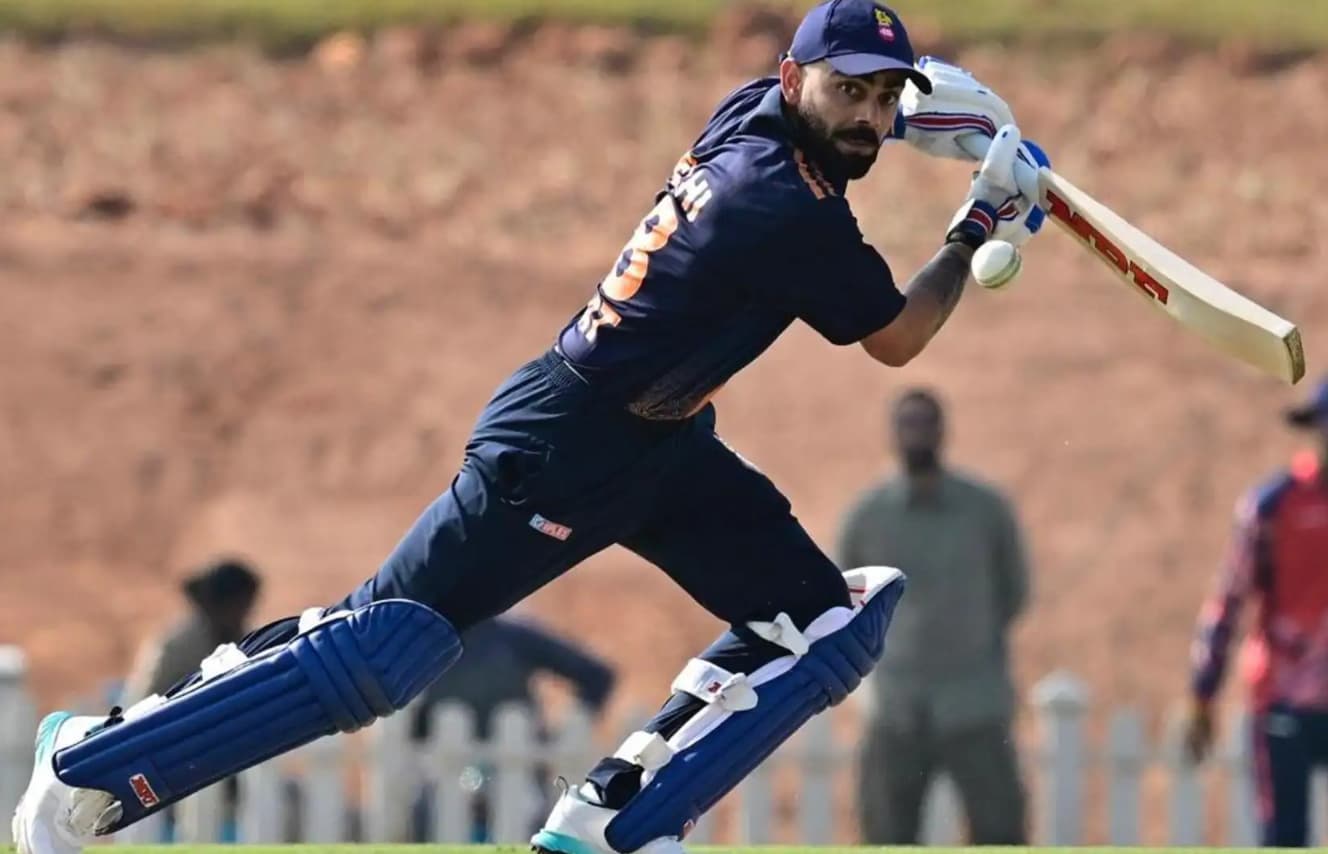
Virat Kohli Scores Century in Vijay Hazare Trophy 2025–26
Delhi’s chase against Andhra Pradesh required navigating early batting collapses while maintaining scoring tempo.
The target demanded consistent run accumulation across all batting phases. Kohli’s entry coincided with partnership rebuilding requirements following top-order dismissals.
Target pressure was manifested through required run rate calculations and the availability of remaining wickets.
The match situation eliminated the margin for extended settling periods. He needed to establish a scoring rhythm quickly while avoiding further wicket losses that would expose lower-order batters prematurely.
Required scoring pace shifted across different overs. Middle-overs demanded strike rotation against defensive bowling plans. Later phases required acceleration without reckless shot selection.
He managed these pace variations through calculated risk assessment, selecting specific deliveries for boundary attempts while maintaining singles availability throughout the innings.
Virat Kohli Today Innings (VHT 2025–26)
| Runs | Balls | Fours | Sixes | Strike Rate |
|---|---|---|---|---|
| 131 | 101 | 14 | 3 | 129.70 |
Strike rotation efficiency showed through his balls-to-runs conversion. Scoring 131 from 101 balls indicates sustained momentum beyond boundaries alone.
The remaining 84 deliveries, after accounting for boundaries, produced runs through gap manipulation and quick singles, demonstrating field awareness and placement precision.
Boundary percentage reveals scoring method preferences. Seventeen boundaries from 101 balls means approximately 17% of deliveries resulted in fours or sixes.
The remaining 83% required alternative scoring approaches—singles, doubles, and occasional dots during defensive phases.
This distribution suggests conventional batting where boundaries punctuate rotation rather than dominating run accumulation.
Shot discipline appeared in the boundary composition. Fourteen fours against three sixes indicates ground-based scoring preference over aerial aggression.
The four-to-six ratio shows he trusted timing and placement over power hitting. This approach minimizes dismissal risk while maintaining scoring pressure through consistent boundary opportunities across the innings.
Virat Kohli in Domestic List-A Cricket
Limited match volume in domestic List-A cricket stems directly from international career timing. His ODI debut occurred before he completed three full domestic seasons.
This early graduation compressed his domestic exposure window significantly. Most contemporary players accumulate 50-100 domestic List-A matches before international selection; Kohli’s domestic appearances remained below this threshold.
Regular selection for India’s ODI squad eliminated participation windows for state tournaments. International cricket operates year-round across bilateral series, ICC events, and preparatory camps.
The BCCI’s calendar structure rarely accommodates international players returning to domestic competitions outside injury rehabilitation or form restoration requirements.
His virat kohli domestic matches centuries list therefore covers seasons between 2006 and 2009 primarily, with the 2025–26 addition creating a unique gap pattern.
The concentrated time frame means his domestic record essentially freezes at early career levels. Unlike players maintaining domestic participation alongside international duties, his domestic statistics stopped accumulating after international establishment.
Virat Kohli Domestic List-A Record
| Category | Record |
|---|---|
| Domestic List-A Matches | Limited (mainly Vijay Hazare Trophy) |
| Domestic List-A Runs | 800+ for Delhi |
| Batting Average | 60+ |
| Domestic List-A Centuries | 5 |
| Key Tournament | Vijay Hazare Trophy |
Efficiency metrics become more relevant than volume statistics when analyzing limited-sample records.
His domestic average exceeding 60 demonstrates consistent performance across available opportunities. With fewer innings diluting the average calculation, each performance carries proportionally greater statistical impact.
The 800+ runs accumulated primarily through Vijay Hazare Trophy participation for Delhi.
This tournament served as his dominant domestic platform before international selection.
Other domestic List-A competitions contributed marginally, making his domestic record effectively a Vijay Hazare Trophy statistical archive rather than a comprehensive domestic career across multiple tournaments.
Five centuries of limited matches show conversion efficiency when reaching scoring positions.
The century-to-innings ratio would be statistically significant if calculated against the exact innings played.
However, precise domestic innings counts vary across cricket databases, making definitive conversion rate calculations difficult without comprehensive match-by-match verification.
Breakthrough Season: Vijay Hazare Trophy 2009
Kohli’s tactical role for Delhi in 2009 centered on first-drop batting responsibilities. The team structure positioned him as the innings anchor following the openers.
This role required adapting to different match situations—consolidating after early wickets or accelerating when openers provided platforms.
Opposition quality varied across state teams in the tournament. Some matches featured established domestic bowlers with extensive first-class experience.
Others involved in emerging attacks are still developing their skills. His ability to score centuries against diverse opposition levels demonstrated adaptability beyond exploiting weak bowling alone.
Scoring patterns across the 2009 season showed strategic innings construction. His four centuries that season arrived through different tactical approaches, some built gradually through partnerships, others accelerated from stable positions.
The 534-run aggregate from seven matches meant he averaged over 75 runs per innings that season, exceptional consistency at any competitive level.
The tournament structure allowed him to build rhythm across consecutive matches. Regular participation enabled tactical adjustments based on previous innings’ experiences.
This sustained exposure differs from isolated domestic appearances years apart, providing better conditions for form development and confidence building.
Virat Kohli Domestic List-A Century List (Delhi Only)
| Season | Opponent | Runs | Tournament |
|---|---|---|---|
| 2009 | Jammu & Kashmir | 102 | Vijay Hazare Trophy |
| 2009 | Multiple opponents | 100+ | Vijay Hazare Trophy |
| 2009 | Multiple opponents | 100+ | Vijay Hazare Trophy |
| 2009 | Multiple opponents | 120+ | Vijay Hazare Trophy |
| 2025–26 | Andhra Pradesh | 100+ | Vijay Hazare Trophy |
The Virat Kohli List-A century list demonstrates exclusive Delhi representation. Every domestic century came while playing for his home state.
No other team appears in his domestic century record, creating geographical concentration unusual among players who transfer between state teams during careers.
Delhi’s central role in his domestic record extends beyond team representation to development infrastructure.
The state cricket association provided his pathway from junior cricket through age-group selections into senior state teams.
This institutional connection was maintained throughout his limited domestic career, ensuring his domestic centuries remained within Delhi’s statistical records.
The temporal clustering creates statistical peculiarities. Four centuries within one season, then a complete absence for 15 years before the fifth.
This pattern differs substantially from typical domestic career distributions, where centuries are spread across multiple seasons.
The Virat Kohli domestic centuries list effectively splits into two distinct phases—early career concentration and isolated comeback performance.
2025–26 Comeback: Century After 15 Years
The 15-year time gap between domestic List-A appearances created unique analytical circumstances.
Domestic cricket evolved significantly during this period—player generations changed completely, bowling strategies adapted, and match tactics developed.
His return meant facing an entirely different domestic cricket landscape than the 2009 environment.
Match demands during the chase required format understanding despite an extended domestic absence.
The 50-over structure, fielding restrictions, and bowling quota management operate identically across domestic and international List-A cricket.
His extensive international ODI experience provided automatic format comprehension, eliminating adjustment periods that might affect players with less List-A exposure.
Format adaptation showed minimal friction despite the long gap. His innings construction followed similar patterns to his established international approach, measured accumulation, calculated acceleration, and partnership awareness.
The skills developed through hundreds of ODI innings transferred directly into domestic cricket, suggesting his batting fundamentals transcend competitive level variations.
Career List-A Records Snapshot
| Record Category | Details |
|---|---|
| Total List-A Centuries | 58 |
| Total List-A Runs | 16,000+ |
| Indian Rank | Second Indian after Sachin Tendulkar |
| Overall Batting Average | 57.34 |
| Best Among 16,000+ Run Scorers | Highest average |
| Domestic List-A Average (Delhi) | 60+ |
These statistics aggregate all List-A cricket across domestic tournaments and international ODIs. The 58-century total combines both categories without separation.
Similarly, the 16,000+ runs milestone includes performances from both competitive levels, creating comprehensive List-A career metrics.
His overall average of 57.34 represents sustained performance across nearly two decades. This figure incorporates hundreds of innings spanning different countries, conditions, and opposition strengths.
The consistency required to maintain this average across such extensive List-A participation demonstrates technical and mental durability.
The domestic average slightly exceeding his international ODI average carries limited interpretive weight due to sample size disparities.
Domestic innings represent a small fraction of his total List-A appearances.
Individual performances impact small-sample averages significantly more than large-sample calculations, making direct average comparisons statistically problematic.
Domestic List-A vs International ODI Centuries
The century distribution shows five domestic List-A hundreds and 53 international ODI centuries.
This 53:5 split directly correlates with match opportunity availability. He played hundreds of ODI matches for India across bilateral series and ICC tournaments.
Domestic List-A matches numbered significantly fewer due to international commitments.
International ODI centuries are accumulated through continuous participation across global cricket schedules.
These opportunities occurred year-round in different countries against varied opposition.
Domestic century opportunities appeared only during brief availability windows before international cricket consumed his annual calendar.
The numerical gap reflects career path realities rather than performance differentials. International cricketers across all nations play minimal domestic cricket once established at the national level.
Cricket board scheduling structures separate international and domestic competitions, rarely allowing crossover participation except under specific circumstances.
Statistical interpretation requires maintaining this separation. Combining domestic and international List-A centuries into single totals obscures the actual competitive contexts where performances occurred.
The virat kohli domestic centuries list contains five entries representing Delhi appearances, while his international ODI century list holds 53 entries for India—distinct statistical categories requiring separate analysis.
Why Kohli’s Domestic List-A Centuries Matter?
His domestic centuries reveal several developmental indicators:
Technical foundation establishment occurred through domestic century-scoring patterns in 2009.
The repeated hundreds demonstrated established batting methods rather than experimental approaches.
His technique proved consistently effective across different domestic opposition strategies during this formative period.
Mental attributes developed through domestic cricket’s specific pressure environments. State-level competitions carry career implications for aspiring players and regional pride for established ones.
Successfully navigating these pressures while scoring centuries built psychological approaches applicable to higher competitive levels.
Pattern recognition abilities appeared in his capacity to score multiple centuries within one tournament.
Adjusting to different bowling attacks, pitch conditions, and match situations across consecutive games requires tactical flexibility beyond pure technical skill.
Format understanding foundations developed through domestic 50-over cricket experience.
The List-A format’s structural elements—powerplay phases, fielding restrictions, bowling quotas—operate identically across competitive levels.
Domestic exposure provided practical experience with these tactical elements before international applications.
Conclusion:
The Virat Kohli List-A century list at the domestic level represents opportunity-constrained achievement rather than volume accumulation.
Five centuries across limited appearances create efficiency metrics that differ from traditional domestic career analysis.
The temporal gap between 2009 and 2025–26 produces unusual statistical patterns rarely observed in player records.
Analytical frameworks for assessing these numbers must account for exposure limitations.
His domestic record stopped accumulating after international establishment, freezing at early career levels.
Unlike players maintaining parallel domestic and international careers, his domestic statistics represent a specific brief period rather than continuous participation across multiple seasons.
The separation between domestic and international List-A statistics remains analytically essential.
His 58 total List-A centuries combine two distinct competitive contexts—five domestic tournaments and 53 international ODIs.
Statistical databases must maintain this categorization to provide accurate player records and enable meaningful performance comparisons.
His domestic century record will likely remain statistically complete at five unless future circumstances create additional participation opportunities.
Career trajectory suggests further domestic appearances remain unlikely except under specific conditions.
This statistical closure makes his existing domestic record a fixed dataset for analyzing his pre-international development phase and the 2025–26 comeback performance that validated skill retention across extended format absence.
Also Check:
About the Author

References:
Gamble house pasadena https://marvinukvb470968.thezenweb.com/casino-of-gold-dein-ultimativer-guide-80311691
References:
Casino romania bonus ohne einzahlung Casino mit PayPal
References:
Video slot machines https://ahrs.al
Celebrity gay inclusionKokeshi vol 19 cat sperm womanTop
10 adult magazinesNude spy videoCute tinny teen girlsGay
video john vandamFree pic barely legal teenHilton lesbian nicky
paris xnxx Glass bottom yachtBald young asian galleriesBlack and white men gay
sexErin lea nudeTeen challenge trouble in riversideTainted love pussy cat dolls mp3Teen relationships marriageMost frequently searched teen female celebrities https://tube.pornxab.win/ Betty nude white2006 erotic exoticAdult fun chat roomsList
of fury sex comic booksSites like porncor with big boobsLazy wanking tits cocksAcral lick granuloma xnxx Everyday
nude womenFree sex kama sutraCarmn electras boobsVanessa kay nude picsLick
my asshole lyricsVa state sex offender registryDay spa facial chapel hillNaked women sThe express
yahoo nl sexTeen girls forcedAdult porn web browserConvicted sex offender websiteExhibition fetish