Andy Murray competed at the highest level of professional tennis across nearly a decade of Grand Slam finals.
His record at major championships shows a player who consistently reached the decisive matches but faced the sport’s dominant forces during their peak years.
The British player’s finals appearances span from 2008 to 2016, encompassing multiple surfaces and opponents.
His grand slam finals record reveals patterns of success and struggle across different tournaments.
The Andy Murray Grand Slam Titles Finals demonstrate resilience against an era defined by exceptional competition.
Murray’s finals came during tennis’s most competitive period, where reaching championship matches required defeating multiple elite opponents.
Andy Murray Grand Slam Titles Finals Records List
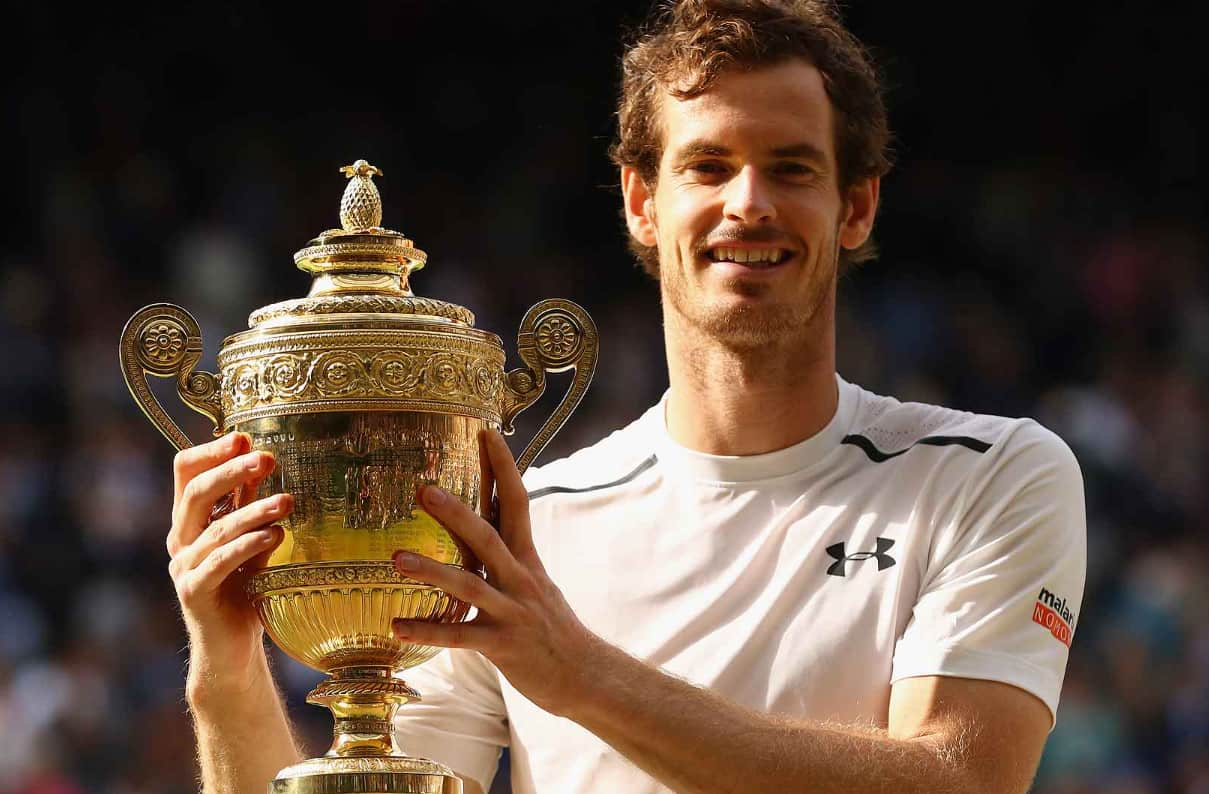
The data shows clear surface preferences and opponent-specific challenges. Murray’s path to the finals often intersected with the same rivals repeatedly.
His conversion rate from finals to titles reflects the intensity of competition during this era.
Andy Murray: Summary of His Grand Slam Finals
| Tournament | Finals Played | Finals Won | Finals Lost | Winning Percentage |
|---|---|---|---|---|
| Australian Open | 5 | 0 | 5 | 0.0% |
| French Open | 1 | 0 | 1 | 0.0% |
| US Open | 2 | 1 | 1 | 50.0% |
| Wimbledon | 3 | 2 | 1 | 66.7% |
| Total | 11 | 3 | 8 | 27.3% |
The surface data reveal Murray’s strongest performances came on grass courts at Wimbledon, where he converted two of three finals into titles.
Hard court finals produced mixed results, with success at the US Open but five consecutive losses at the Australian Open. His single clay court final at Roland Garros also ended in defeat.
AThe ustralian open proved the most challenging venue despite five finals appearances. All five losses came against either Roger Federer or Novak Djokovic, highlighting the quality of opposition.
The tournament’s hard courts and timing in the season presented consistent obstacles.
The gap between finals reached and titles won demonstrates the difficulty of closing matches against peak-form opponents.
Murray faced Federer four times and Djokovic eight times across these finals.
This concentration of elite opposition explains the 27.3% conversion rate from Andy Murray’s Grand Slam finals to championship victories.
Andy Murray Grand Slam Finals Played by Tournament
| Tournament | Year | Opponent | Result | Score |
|---|---|---|---|---|
| Australian Open | 2010 | Roger Federer | Lost | 6-3, 6-4, 7-6(11) |
| Australian Open | 2011 | Novak Djokovic | Lost | 6-4, 6-2, 6-3 |
| Australian Open | 2013 | Novak Djokovic | Lost | 6-7(2), 7-6(3), 6-3, 6-2 |
| Australian Open | 2015 | Novak Djokovic | Lost | 7-6(5), 6-7(4), 6-3, 6-0 |
| Australian Open | 2016 | Novak Djokovic | Lost | 6-1, 7-5, 7-6(3) |
| French Open | 2016 | Novak Djokovic | Lost | 3-6, 6-1, 6-2, 6-4 |
| US Open | 2008 | Roger Federer | Lost | 6-2, 7-5, 6-2 |
| US Open | 2012 | Novak Djokovic | Won | 7-6(10), 7-5, 2-6, 3-6, 6-2 |
| Wimbledon | 2012 | Roger Federer | Lost | 4-6, 7-5, 6-3, 6-4 |
| Wimbledon | 2013 | Novak Djokovic | Won | 6-4, 7-5, 6-4 |
| Wimbledon | 2016 | Milos Raonic | Won | 6-4, 7-6(3), 7-6(2) |
Andy Murray Grand Slam Finals Played by Year
| Year | Tournament | Opponent | Outcome |
|---|---|---|---|
| 2008 | US Open | Roger Federer | Lost |
| 2010 | Australian Open | Roger Federer | Lost |
| 2011 | Australian Open | Novak Djokovic | Lost |
| 2012 | Wimbledon | Roger Federer | Lost |
| 2012 | US Open | Novak Djokovic | Won |
| 2013 | Australian Open | Novak Djokovic | Lost |
| 2013 | Wimbledon | Novak Djokovic | Won |
| 2015 | Australian Open | Novak Djokovic | Lost |
| 2016 | Australian Open | Novak Djokovic | Lost |
| 2016 | French Open | Novak Djokovic | Lost |
| 2016 | Wimbledon | Milos Raonic | Won |
The years 2012, 2013, and 2016 marked Murray’s peak finals frequency. In 2012 and 2013, he reached multiple finals in the same year, winning one title in each season.
The 2016 calendar showed three finals appearances across three different grand slams.
Repeat matchups with Djokovic dominated the timeline, with eight finals against the Serbian player. Federer appeared as an opponent in four finals.
This concentration meant Murray consistently faced opponents ranked number one or two in the world during finals matches.
All Andy Murray Grand Slam Titles Finals
| Year | Tournament | Opponent | Surface | Final Score |
|---|---|---|---|---|
| 2012 | US Open | Novak Djokovic | Hard | 7-6(10), 7-5, 2-6, 3-6, 6-2 |
| 2013 | Wimbledon | Novak Djokovic | Grass | 6-4, 7-5, 6-4 |
| 2016 | Wimbledon | Milos Raonic | Grass | 6-4, 7-6(3), 7-6(2) |
All Andy Murray Grand Slam Titles Finals from 2008 to 2016
- 2012 US Open – First Major Championship
Murray’s Andy Murray Grand Slam first win came in a five-set battle against djokovic lasting four hours and 54 minutes.
The match featured two tiebreak sets and momentum shifts across all five sets. This breakthrough ended Britain’s 76-year wait for a male Grand Slam singles champion.
- 2013 Wimbledon – Home Soil Victory
The Andy Murray Wimbledon wins began with a straight-sets triumph over Djokovic on Centre Court. Murray became the first British man to win Wimbledon since 1936. The three-set scoreline showed dominance against the world number one.
2016 Wimbledon – Second Grass Court Title
Murray’s andy murray last grand slam came against Raonic in another straight-sets performance.
All three sets went to tiebreaks in the first and third sets, demonstrating close competition. This victory marked his third major title and second Wimbledon championship.
How many Grand Slam finals did he play?
Murray reached 11 grand slam finals, winning 3 and losing 8 for a 27.3% conversion rate.
- Overall conversion rate
The three titles from 11 finals places Murray among players who reached multiple championship matches during tennis’s strongest competitive era.
Eight finals losses came against opponents who dominated the sport during overlapping periods. Success required defeating the same elite rivals repeatedly.
- Tournament difficulty pattern
Australian open presented unique challenges with five finals and zero titles. Melbourne’s hard courts and early-season scheduling favored opponents who peaked in January. The 0-5 record contrasts sharply with Wimbledon’s 2-1 success rate.
- Elite-era competition
Murray’s finals record answers why is andy murray in the big four despite fewer major titles than his peers. His consistent presence in championship matches during the Nadal-Djokovic-Federer era demonstrates sustained excellence.
Reaching finals required navigating draws featuring multiple former champions in earlier rounds and Andy Murray Grand Slam semi-finals against top-ranked opponents.
Conclusion:
The Andy Murray Grand Slam Titles Finals record shows three championships from 11 finals across eight years of elite competition.
Andy Murray’s grand slam has Andy Murray won includes two Wimbledon titles and one US Open trophy, all on hard and grass surfaces.
Clay and hard court finals at Roland Garros and Melbourne remained unconquered despite multiple attempts.
- Titles vs finals gap: eight losses came against Federer and Djokovic exclusively. No finals featured opponents outside the top five rankings.
- surface success: grass court performance delivered two-thirds of his major titles. Hard court finals produced one title from seven attempts.
- Legacy metrics: reaching finals during tennis’s strongest decade established Murray among the sport’s consistent performers.
The Andy Murray net worth reflects both on-court prize money and commercial endorsements earned through sustained championship-level tennis.
His finals appearances occurred when four players simultaneously dominated the sport’s top rankings.
Also Check:
- Carlos Alcaraz vs Novak Djokovic Head to Head Records
- Richest Male Tennis Players in History with Net Worth
- Longest Men’s Singles Matches in Australian Open History
- Longest Women’s Singles Matches in Australian Open History
- Most Grand Slam Titles Won by Male Tennis Players List
- Youngest Career Grand Slam Winners in Men’s Tennis
- Australian Open Men’s Singles Winners List
About the Author
