A cricket field consists of multiple distinct components. Each part has specific measurements. These components work together to create the complete playing area.
Cricket ground dimensions are divided into four main sections. The pitch forms the central playing strip. The infield surrounds the pitch with a circular boundary.
The outfield extends from the infield to the outer boundary. The total land area includes all these parts plus facilities.
The pitch is where batsmen and bowlers operate. It measures exactly 22 yards in length. This rectangular strip sits at the center. A clay surface with short grass covers the pitch.
The infield area uses curved boundary marking. The radius measures 27.4 meters from the pitch end. This circle defines fielding restriction zones. Close infield uses smaller overlapping circles inside this area.
The outfield forms the largest ground component. It extends from the infield boundary to the outer edge. The oval shape has a variable diameter. Cricket Ground diameter ranges from 137 to 150 meters for most grounds.
Total land requirements exceed the playing field alone. Spectator seating needs additional space. Light installations require separate area allocation. The cricket ground size in acres reaches 6 to 7 acres total.
Ground shape varies between venues. Perfect circles, ovals, and rounded rectangles all exist. Irregular shapes without symmetry are also permitted. All grounds maintain smooth boundaries without sharp corners.
Cricket Ground Dimensions
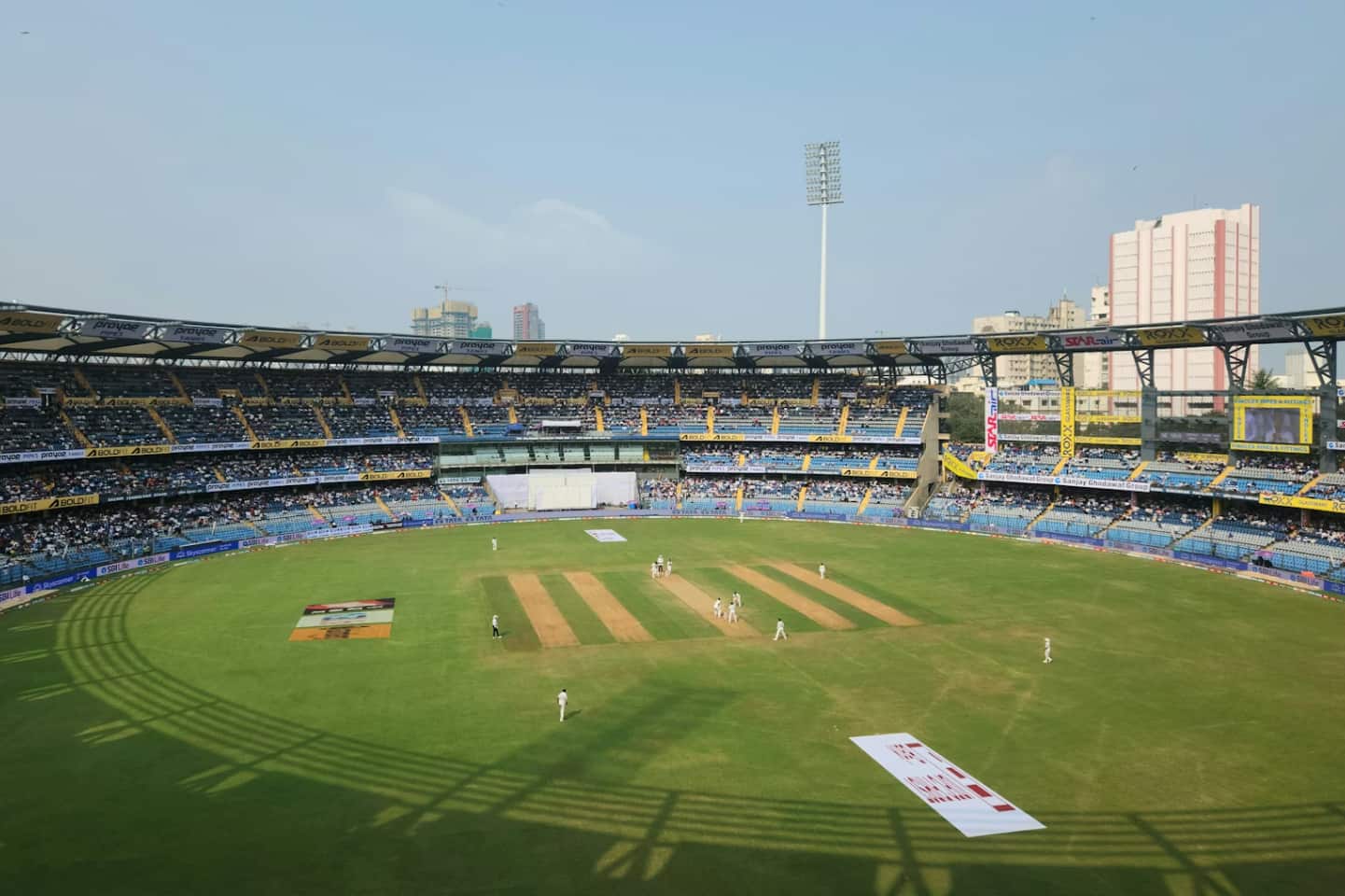
This analysis examines each field component separately. Numbers provide exact measurements for every part. Data covers pitch, infield, close infield, outfield, and total land requirements.
Cricket Pitch Measurement Specifications
The pitch forms cricket’s central playing area. Most match action occurs on this rectangular strip. Batsmen hit bowled balls from this surface. Bowlers deliver from pitch ends.
Pitch length measures 22 yards exactly. Converting to metric gives 20.12 meters. This measurement never changes across any cricket ground worldwide.
The pitch location sits almost at the ground center. A center point within the boundary determines pitch placement. Multiple pitches can be prepared around this central area.
Surface composition uses clay with short grass covering. The rectangular strip provides consistent bounce. Ground maintenance focuses heavily on pitch quality.
Pitch Dimension Specifications
| Measurement Type | Imperial Units | Metric Units | Variation Allowed | Surface Type |
|---|---|---|---|---|
| Pitch Length | 22 yards | 20.12 meters | None | Clay with grass |
| Pitch Position | Center of ground | Center of ground | Minimal | Fixed location |
The 22-yard measurement represents cricket’s fundamental constant. No venue can alter this dimension. International and domestic cricket use identical pitch length.
Pitch width is not specified in available data. Only length measurement appears in regulations. The rectangular shape remains standard across all venues.
Standard Infield Radius Measurements
The infield area surrounds the pitch with circular boundary. This curved boundary has 27.4-meter radius. Converting to imperial units gives approximately 90 feet.
The circle center positions at one end of the pitch. This placement ensures consistent infield size. All grounds use this identical measurement.
Fielding restrictions during powerplay overs use this circle. Specific fielder numbers must stay inside the infield. The 27.4-meter radius defines this restricted zone.
Optimal lighting requirements exist for infield areas. Proper visibility ensures player safety. Night matches require adequate illumination throughout the infield.
Infield Circle Measurements
| Infield Component | Radius (Meters) | Radius (Feet) | Diameter (Meters) | Diameter (Feet) | Circle Position |
|---|---|---|---|---|---|
| Standard Infield | 27.4 | 90 | 54.8 | 180 | From pitch end |
| Center Reference | From pitch end | From pitch end | N/A | N/A | One end of 22-yard pitch |
The 27.4-meter radius creates 54.8-meter diameter circle. This infield circle remains constant regardless of total ground size. A 450-foot ground and 500-foot ground use identical infield dimensions.
Infield importance extends beyond fielding restrictions. Close catching positions operate within this area. Ground conditions in the infield affect gameplay significantly.
Close Infield Circle Size Analysis
Close infield uses smaller circular measurements. Two slightly overlapping circles define this area. Each circle has 13.7-meter radius.
Converting to imperial units gives 45 feet radius. This measurement equals exactly half the standard infield radius. The mathematical relationship simplifies ground marking.
Close infield diameter measures 27.4 meters. This equals the standard infield radius. The overlapping circles create specific fielding zones.
Close Infield Specifications
| Close Infield Feature | Radius (Meters) | Radius (Feet) | Diameter (Meters) | Number of Circles | Overlap Pattern |
|---|---|---|---|---|---|
| Individual Circle | 13.7 | 45 | 27.4 | 2 | Slightly overlapping |
| Relationship to Standard Infield | Half radius | Half radius | Equals standard radius | Two circles | Creates inner zone |
The 13.7-meter measurement appears in close infield specification only. These inner circles define tighter fielding areas. Close catching positions operate within these boundaries.
The two-circle design creates specific field zones. Overlapping pattern ensures complete infield coverage. Fielding strategies use these demarcated areas.
Outfield Diameter Range Analysis
Cricket ground dimensions in meters for outfield span 137 to 150 meters. This represents ground diameter measurement. Converting to feet gives 450 to 493 feet range.
The outfield forms oval shape. It extends from infield boundary to outer edge. Total diameter includes infield plus outfield areas.
Men’s cricket uses 450 to 500 feet diameter. Women’s cricket employs 360 to 429 feet range. These measurements include complete ground from edge to edge.
The 13-meter variation in outfield size provides venue flexibility. Minimum 137-meter diameter ensures adequate playing area. Maximum 150-meter limit prevents excessively large grounds.
Outfield Diameter Measurements
| Cricket Type | Minimum Diameter (Meters) | Maximum Diameter (Meters) | Minimum Diameter (Feet) | Maximum Diameter (Feet) | Range (Meters) |
|---|---|---|---|---|---|
| Men’s Cricket | 137 | 150 | 450 | 493 | 13 |
| Full Men’s Range | 137 | 152 | 450 | 500 | 15 |
| Women’s Cricket | 110 | 131 | 360 | 429 | 21 |
The outfield diameter encompasses entire playing area. This measurement includes pitch, infield, and extended outfield. Boundary rope marks the outfield edge.
Oval shape means diameter varies at different points. The 137-150 meter range represents typical measurements. Some grounds reach 152 meters (500 feet) maximum.
Pitch to Outfield Size Ratio Comparison
The pitch occupies minimal percentage of total ground area. Its 20.12-meter length represents small fraction. Outfield diameter exceeds pitch length by 6.8 to 7.5 times.
Minimum ground diameter of 137 meters divided by pitch length of 20.12 meters equals 6.8 ratio. Maximum ground diameter of 150 meters gives 7.5 ratio.
This calculation shows the relative scale. Most playing area exists beyond the pitch itself. The outfield provides the majority of ground space.
Component Size Comparison
| Component | Length/Diameter | Percentage of Ground (Min) | Percentage of Ground (Max) | Multiple of Pitch Length |
|---|---|---|---|---|
| Pitch | 20.12 meters | 14.7% | 13.4% | 1.0x |
| Standard Infield Diameter | 54.8 meters | 40.0% | 36.5% | 2.7x |
| Minimum Ground | 137 meters | 100% | 91.3% | 6.8x |
| Maximum Ground | 150 meters | 109.5% | 100% | 7.5x |
The infield diameter of 54.8 meters represents 40% of minimum ground diameter. Close infield circles occupy even smaller percentage. The pitch itself covers less than 15% of total diameter.
These ratios show field component relationships. Outfield dominates total playing area. Central components occupy concentrated space.
Total Land Area Requirements and Calculations
Minimum land area measures 150 x 150 meters square. This provides 22,500 square meters total. Converting to acres equals 5.5 acres.
This calculation covers playing field only. The square boundary accommodates oval playing area. Additional buffer space exists in corners.
Cricket ground dimensions calculator would multiply 150 by 150 to get square meters. Division by 4,047 (square meters per acre) converts to 5.56 acres.
Total land requirement increases to 6-7 acres. This includes spectator seating areas. Light installation spaces add to total.
Land Area Breakdown and Calculations
| Land Component | Measurement | Square Meters | Acres | Purpose | Additional Space |
|---|---|---|---|---|---|
| Playing Field Base | 150 x 150 meters | 22,500 | 5.5 | Actual playing area | Minimum requirement |
| Total Land Required | Variable | 24,300-28,300 | 6-7 | Complete facility | Includes all infrastructure |
| Additional Infrastructure | Calculated difference | 1,800-5,800 | 0.5-1.5 | Seating, lights, facilities | 8-21% of total |
The 22,500 square meter calculation assumes square layout. The oval field fits within square perimeter. Corner areas outside oval provide buffer zones.
Additional 0.5 to 1.5 acres accommodates non-playing areas. Spectator seating occupies significant space. Light towers for day-night matches need placement areas.
Total 6-7 acre requirement limits urban venue construction. Land availability determines where grounds can be built. Dense urban areas struggle meeting space needs.
Field Component Relationships and Proportions
Close infield radius measures exactly half of standard infield radius. The 13.7-meter measurement doubles to 27.4 meters. This mathematical relationship appears in ground specifications.
Close infield diameter equals standard infield radius. Both measure 27.4 meters. This creates nested circular pattern.
Standard infield diameter of 54.8 meters fits within minimum outfield diameter 2.5 times. The 137-meter ground contains infield with room to spare.
Component Relationship
| Relationship | Component 1 | Component 2 | Ratio | Mathematical Pattern |
|---|---|---|---|---|
| Radius Doubling | Close infield radius (13.7m) | Standard infield radius (27.4m) | 1:2 | Exact doubling |
| Diameter-Radius Match | Close infield diameter (27.4m) | Standard infield radius (27.4m) | 1:1 | Same measurement |
| Infield to Ground | Standard infield diameter (54.8m) | Minimum ground (137m) | 1:2.5 | Infield fits 2.5 times |
| Pitch to Ground | Pitch length (20.12m) | Minimum ground (137m) | 1:6.8 | Ground 6.8x larger |
These relationships show intentional design. The doubling pattern simplifies ground marking. Equal measurements between different components aid field setup.
Nested circles create fielding zones. Each zone has specific strategic purpose. Component proportions affect gameplay tactics.
Ground Shape Variations Within Size Standards
Cricket fields come in various shapes. Perfect circles represent one option. Elongated ovals provide different configuration.
Rounded rectangles exist at some venues. Irregular shapes with little symmetry are also permitted. All maintain smooth boundaries without sharp corners.
No fixed shape requirement exists for professional cricket. Ground designers work with available land. Shape variation accommodates different site constraints.
The boundary rope determines field perimeter. Flexible marking system allows shape adjustment. Different matches can use different boundary configurations.
Measurement Precision in Ground Construction
Ground marking requires exact measurements. The 20.12-meter pitch length needs precise implementation. Infield circles use 27.4-meter and 13.7-meter radii exactly.
Boundary rope placement maintains consistent distances. Surveying equipment ensures accuracy. Professional venues undergo measurement verification.
Ground maintenance preserves original dimensions. Regular inspection confirms measurement compliance. Any deviation requires immediate correction.
Men’s vs Women’s Cricket Ground Size Differences
Men’s cricket allows a 450 to 500 feet diameter. Women’s cricket uses 360 to 429 feet. This 71 to 90 feet difference reflects different game requirements.
The maximum men’s diameter exceeds the minimum women’s diameter by 71 feet. A significant gap exists between categories. Power-hitting capabilities justify different standards.
Women’s grounds show a 69-foot variation despite a smaller size. The 360 to 429 feet range provides flexibility. This accommodation allows more venues to host women’s cricket.
Converting to metric gives a clearer comparison. Men use 137-152 meters. Women use 110-131 meters. The 27-meter minimum difference stands out.
Area Calculation Methods for Ground Construction
The 150 x 150 meter requirement creates a square footprint. Calculation multiplies length by width. 150 x 150 = 22,500 square meters.
Conversion to acres is divided by 4,047. The calculation: 22,500 ÷ 4,047 = 5.56 acres. Rounding gives 5.5 acres standard.
Total land calculation adds infrastructure space. An additional 1,800 to 5,800 square meters is needed. This equals 0.5 to 1.5 extra acres.
Upper limit calculation: 22,500 + 5,800 = 28,300 square meters. Dividing by 4,047 gives approximately 7 acres.
Component Summary of Cricket Ground Dimensions
Cricket ground dimensions consist of four measurable components.
The pitch measures 22 yards (20.12 meters) in length. Standard infield uses a 27.4-meter radius circle. Close infield employs 13.7-meter radius circles.
The outfield diameter ranges from 137 to 150 meters for most cricket. Men’s grounds span 450-500 feet. Women’s grounds use a 360-429 feet diameter.
Total land area requires a minimum of 5.5 acres for a playing field. Complete facility needs 6-7 acres, including infrastructure. The additional 0.5-1.5 acres accommodate seating and lighting.
Component relationships show mathematical patterns. Close infield radius equals half of the standard infield radius.
Close infield diameter matches standard infield radius. These proportions simplify ground construction.
Ground shape varies within size standards. Ovals, circles, rectangles, and irregular shapes all comply. Only smooth boundaries without corners are required.
This flexibility accommodates different venue capabilities while maintaining consistent cricket ground dimensions across all field components.
Also Check:
About the Author
