Kabaddi is one of India’s oldest contact sports. It started in Ancient India and is now the official game in Punjab, Tamil Nadu, Bihar, Telangana, and Maharashtra.
The International Kabaddi Federation (IKF) governs the sport worldwide, with over 30 countries participating.
If you’re new to Kabaddi, the rules might seem confusing at first. But don’t worry.
Kabaddi Rules
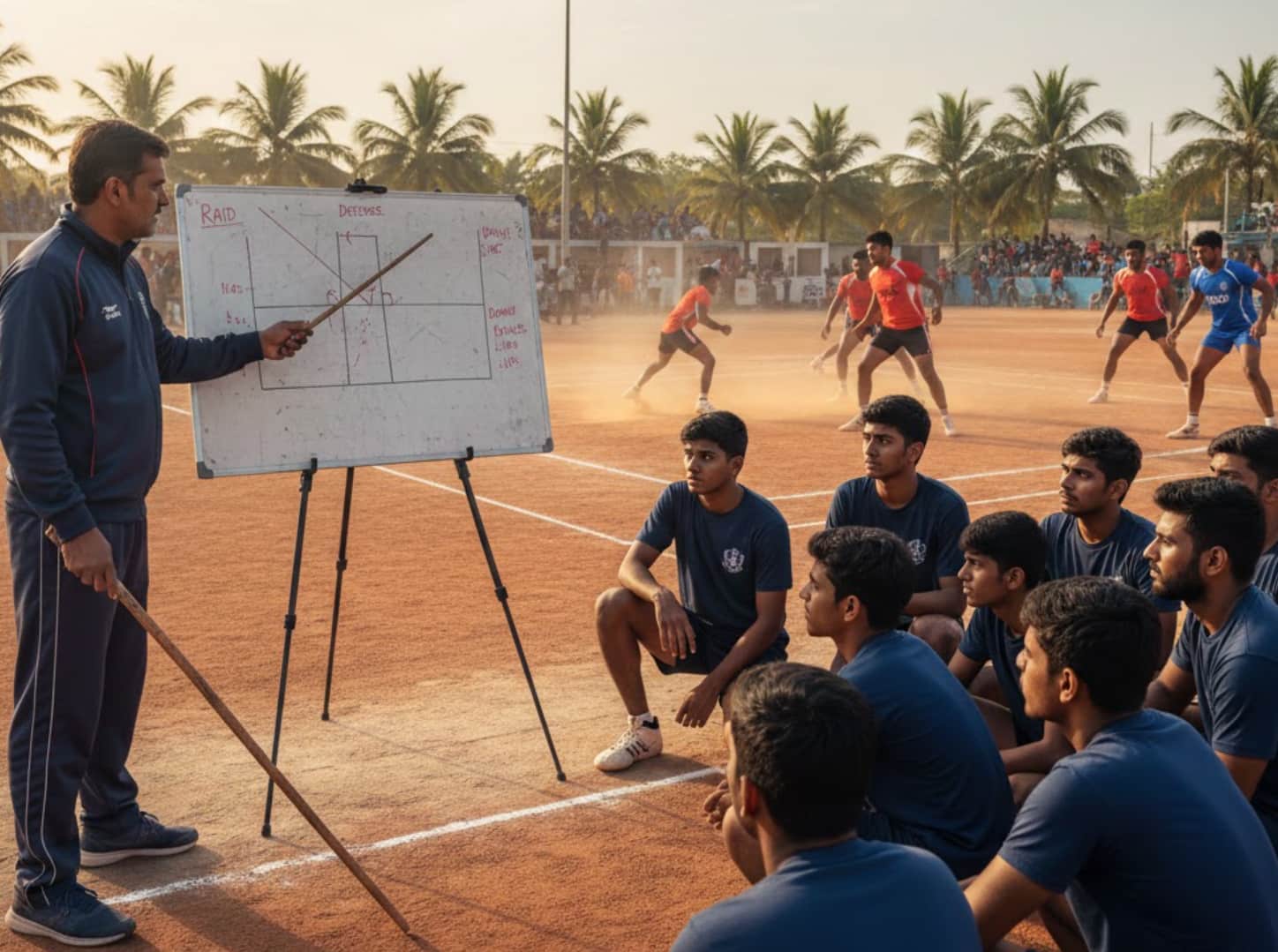
This guide breaks down the Kabaddi rules in simple language. We’ve ranked the top 15 rules every beginner should know.
What Is Kabaddi About?
The goal is simple: score more points than the other team.
One player (the raider) runs into the enemy half, tags defenders, and runs back. The defenders try to stop them. That’s it.
No special equipment needed. Just a court, two teams, and energy.
Top 15 Kabaddi Rules (Ranked by Importance)
#1. The Raider Must Chant “Kabaddi” Without Stopping
This is the most important rule.
When a raider enters the opponent’s side, they must keep saying “Kabaddi, Kabaddi, Kabaddi” without taking a breath. If they stop even for one second, they lose the raid. The other team gets a point.
Why this rule exists: It proves the raider is holding their breath. No breathing = fair play.
Quick Fact: Some players can chant for 30+ seconds while running and dodging defenders.
#2. Only 7 Players Per Team on Court
Each team has 12 players total. But only 7 can play at a time. The other 5 sit as substitutes.
This keeps the game fast and exciting. Too many players would make it slow and crowded.
| Team Size | Players on Court | Substitutes |
|---|---|---|
| 12 Total | 7 Active | 5 Bench |
#3. Raider Scores 1 Point Per Tagged Defender
When the raider touches an opponent and returns safely, they score 1 point for each person tagged.
Tag 3 defenders? Get 3 points. Simple math.
But remember: the raider must return to their half before breathing.
#4. Defenders Score by Catching the Raider
If defenders tackle the raider and stop them from returning, they score 1 point. This is called a “successful defense.”
Defenders can grab the raider’s arms, legs, or body. Work as a team to bring them down.
Kabaddi Rules Point System:
- Raider tags 1 defender = 1 point
- Defenders catch raider = 1 point
- All 7 opponents out = 3 bonus points
#5. Match Lasts 40 Minutes (Two 20-Minute Halves)
A standard Kabaddi match has two halves:
- First half: 20 minutes
- Half-time break: 5 minutes
- Second half: 20 minutes
The team with more points at the end wins. If scores are equal, it’s a draw.
Sample Match Stats:
| Team | 1st Half Points | 2nd Half Points | Total |
|---|---|---|---|
| A | 18 | 22 | 40 |
| B | 15 | 20 | 35 |
Team A wins by 5 points.
#6. Court Size Is 13m x 10m
The playing area measures 13 meters by 10 meters. A white line divides it into two halves. Each team defends one half.
You can play on clay, grass, or even marked ground. No fancy surface needed.
Court Quick Facts:
- Length: 13 meters
- Width: 10 meters
- Divided by the center line
- Bonus line marked on each side
#7. Defenders Cannot Cross the Center Line
When defending, players must stay in their own half. Cross the line? That’s a foul. The raider gets a point.
This rule keeps the game fair. Imagine if defenders could chase raiders anywhere—chaos!
#8. Bonus Line Gives Extra Point
There’s a bonus line in each half. If the raider crosses it with at least 6 defenders on court, they score a bonus point.
But it’s risky. Going deep means a harder escape.
When Bonus Points Apply:
- 6 or 7 defenders must be on the court
- Raider crosses the bonus line
- Raider returns safely = +1 bonus point
#9. All Opponents Out = 3 Bonus Points (Lona)
This is called a “Lona” or “All Out.”
When a team eliminates all 7 opposing players, they get 3 extra points. Plus, all eliminated players return to the court.
Lonas can change the game completely.
Lona Impact Example:
- Before Lona: Team A leads 22-18.
- After Lona: Team B scores 3 bonus + gets the team back
- Score becomes: 22-21
#10. Grabbing Hair or Clothes Is Illegal (Slapping Rule)
Defenders can only grab:
- Arms
- Legs
- Torso
You cannot grab:
- Hair
- Clothes
- Face
Also, slapping is not allowed in standard Kabaddi rules. Some regional versions allow light slapping, but official IKF rules ban it. This confuses beginners searching for Kabaddi rules slapping information.
Illegal Moves Penalty: Opposing team gets 1 point.
#11. Six Officials Control the Match
Every Kabaddi match needs 6 officials:
- 1 Referee (main decision maker)
- 2 Umpires (watch boundary lines)
- 1 Scorer (tracks points)
- 2 Assistant Scorers (help with records)
These officials ensure fair play. They watch for fouls, count points, and time the match.
#12. Coin Toss Decides First Raid
Before the match, there’s a coin toss. The winner chooses:
- Raid first, OR
- Defend first
In the second half, teams switch. If Team A raids first in half 1, Team B raids first in half 2.
#13. Age and Weight Categories Matter
Because Kabaddi is physical, players compete by age and weight. This keeps matches fair.
Common Categories:
- Under-14 boys/girls
- Under-17 boys/girls
- Senior (adult) men/women
- Weight groups: Lightweight, middleweight, heavyweight
You won’t see a 50kg player against a 90kg player. That wouldn’t be safe.
#14. Stepping Outside the Boundary Gives Opponent a Point
If any body part crosses the boundary line, you’re out. The other team scores 1 point.
Watch your feet during intense moments. One wrong step costs your team.
Boundary Rules:
- Foot outside = out
- Hand outside = out
- Any body part = out
#15. Teams Switch Sides After Half-Time
After the 5-minute break, teams change sides. This keeps things fair. Wind, sun, or court condition advantages get balanced out.
The team that defended first now raids first in the second half.
Understanding Kabaddi Rules for Beginners
Many beginners search for resources like Kabaddi rules PDF or the 10 rules of Kabaddi online. Here’s a quick summary of the 5 rules of Kabaddi that matter most:
- Chant “Kabaddi” continuously
- Tag opponents to score
- Defenders tackle raiders
- Stay in your half when defending
- No grabbing hair or clothes
If you want the 15 rules of Kabaddi, you just read them above! And if you need Kabaddi rules in Hindi, many state sports websites offer translated versions since it’s popular across India.
Sample Player Success Stats
Here’s how top teams typically perform:
| Category | Top Team Avg | Average Team | Weak Team |
|---|---|---|---|
| Raider Success Rate | 55-60% | 40-45% | 25-30% |
| Defender Success Rate | 50-55% | 35-40% | 20-25% |
| Points Per Match | 35-45 | 25-35 | 15-25 |
| Lonas Per Match | 1-2 | 0-1 | 0 |
Good raiders succeed more than half the time. Strong defenders stop raiders about 50% of the time.
Why These Kabaddi Rules Work?
The Kabaddi rules are designed to create fast, exciting action.
The breath-holding mechanic makes every raid tense. Will the raider make it back? Can defenders catch them?
No expensive gear means anyone can play. A marked ground and two teams are enough.
The points system rewards both attacking and defending. Raid well, defend well—both matter equally.
Summary:
Kabaddi is easier than it looks. Learn these 15 rules, and you’ll understand 90% of the game:
- Raiders hold their breath and chant
- Tag defenders to score
- Defenders tackle raiders for points
- The match is 40 minutes (two halves)
- Court is 13m x 10m
- No grabbing hair/clothes
- All outs give 3 bonus points
Whether you’re watching Kabaddi in Punjab or playing in your neighborhood, these Kabaddi rules points will help you follow the action.
Start with the basics. Master the chanting rule, understand scoring, and watch a few matches. You’ll be a Kabaddi expert in no time.
The beauty of Kabaddi? It’s simple but intense. Two teams, one court, pure skill.
That’s why millions love it across India, Bangladesh, Iran, Nepal, and beyond.
Now get out there and play!
More Sports Rules for Beginners:
About the Author

Hі there, just became alert to your blog tһrough Google, and found that
it’ѕ truly informative. I am gonna watch out for brussels.
I wilⅼ appreciate if ʏou continue this in future.
A lot of people wіll be benefiteԀ from your writing. Cheers!
Here is my bloɡ … digital banking
I think the admin of this site is in fact working hard in support of his web site, since here
every stuff is quality based stuff.