Let me tell you about one of the coolest sports you’ve never heard of.
Sepak Takraw is like volleyball, but you can’t use your hands.
That’s right – no hands at all. Players kick a rattan ball over a net using only their feet, knees, head, and chest. It’s fast. It’s acrobatic. And it’s absolutely thrilling to watch.
This game comes from Southeast Asia. The name literally means “Kick Ball.” Three players work together on each side.
They flip, they spin, they do bicycle kicks that look impossible.
But don’t worry – you don’t need to be a gymnast to understand Sepak Takraw Rules.
The game has been around since the 1400s. But it got official rules in the 1940s.
Today, ISTAF (the International Sepak Takraw Federation) runs the whole sport worldwide.
It’s huge in Malaysia and Thailand. But it’s also growing fast in the USA and Canada.
Sepak Takraw Rules
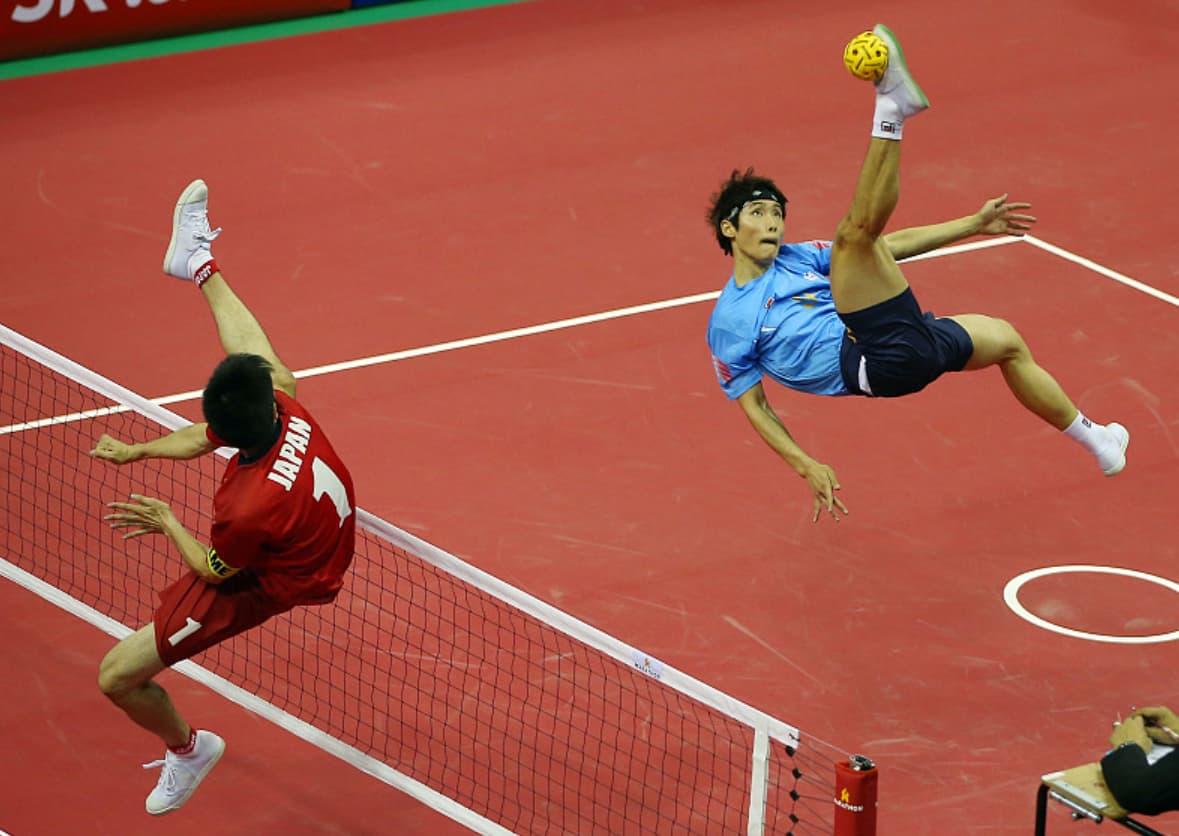
Let’s break down everything you need to know.
Top 10 Most Important Sepak Takraw Rules (Ranked)
#1 – No Hands Allowed (Ever)
This is the golden rule. You cannot touch the ball with your hands or arms. Period.
- Why it matters: Touch the ball with your hand, and you lose a point instantly. This makes Sepak Takraw completely different from volleyball.
- Real example: A player jumps high for a save. The ball hits his forearm. Whistle blows. Point to the other team. Game over for that rally.
#2 – Three Touches Maximum Per Side
Your team gets three touches to send the ball back over the net. Not four. Not five. Just three.
- Why it matters: This forces quick thinking and teamwork. You can’t just keep the ball on your side forever.
- Real example: Player one receives with his chest. Player two controls with his knee. Player three spikes with his foot. That’s three touches. Perfect play.
#3 – Ball Must Cross the Net
The ball has to make it over the net and land inside the opponent’s court boundaries.
- Why it matters: Miss the court, and your opponents get a free point. Accuracy wins games.
- Real example: A player does a beautiful bicycle kick. But the ball flies wide. It lands outside the line. His team loses the point even though the kick looked amazing.
#4 – Server Must Keep One Foot in the Circle
When serving, the Tekong (server) must keep one foot inside the service circle. He cannot jump off the ground.
- Why it matters: This keeps serves fair and prevents players from getting crazy advantages.
- Real example: A Tekong gets excited. He jumps while kicking the serve. Fault called. The point goes to the other team before the rally even starts.
#5 – No Touching the Net
Players cannot touch the net at any time during play. Not even a little bit.
- Why it matters: Net touches change the game unfairly. The rule keeps the play clean.
- Real example: An Inside player stretches for a save. His shoulder brushes the net. Doesn’t matter if he made a great play. His team loses the point.
#6 – Ball Cannot Touch the Ground
This rule explains sepak takraw rules scoring perfectly. If the ball hits the ground on your side, the other team scores.
- Why it matters: This is how most points happen. Ground touches end rallies immediately.
- Real example: Three players dive for the ball. Nobody reaches it. It bounces once. Point awarded to opponents.
#7 – Stay on Your Side of the Court
You cannot reach over the net or step into the opponent’s court area.
- Why it matters: Crossing the line gives the other team an automatic point.
- Real example: A player follows through on a kick. His foot lands on the other side. Whistle blows. Fault called.
#8 – The Tekong Must Kick on Service
The server (Tekong) must kick the ball when serving. A teammate throws the ball to him. He kicks it over.
- Why it matters: This makes serves harder than volleyball and requires real skill.
- Real example: The Tekong tries to head the ball instead of kicking it. Not allowed. Point to the other team.
#9 – Win Two Sets to Win the Match
According to Sepak Takraw Rules, you need two sets to win. First team to 21 points wins each set.
- Why it matters: This gives teams a chance to come back even after losing one set.
- Real example: Team A wins the first set 21-18. Team B fights back and wins the second set 21-19. Now they play a deciding third set.
#10 – Tie Breaker Rules at 21-21
If a set ties at 21-21, teams play until someone leads by two points or reaches 25 points.
- Why it matters: This prevents endless games while still requiring a clear winner.
- Real example: The score reaches 21-21. Teams battle to 24-24. Finally, one team scores twice in a row. They win 26-24.
Sepak Takraw Court & Ball Data
| Specification | Measurement |
|---|---|
| Court Length | 13.4 meters |
| Court Width | 6.1 meters |
| Net Height (Men) | 1.5 meters |
| Net Height (Women) | 1.42 meters |
| Ball Construction | 12 holes, 20 intersections |
| Ball Material | Synthetic (ISTAF approved) |
| Court Type | Similar to doubles badminton |
Scoring System & Common Faults (Ranked by Frequency)
| Rank | Fault Type | Result |
|---|---|---|
| 1 | Ball hits ground | Point to opponent |
| 2 | Ball lands out of bounds | Point to opponent |
| 3 | More than 3 touches | Point to opponent |
| 4 | Hand/arm touches ball | Point to opponent |
| 5 | Server jumps during service | Point to opponent |
| 6 | Player touches net | Point to opponent |
| 7 | Ball doesn’t cross net | Point to opponent |
| 8 | Ball touches ceiling/object | Point to opponent |
Understanding sepak takraw rules for beginners means knowing these faults. Every point in Sepak Takraw comes from someone making a mistake.
Beginner Mistakes (Most Common to Least)
- Mistake #1: Using hands accidentally when panicking
- Mistake #2: Taking more than three touches without realizing
- Mistake #3: Serving while jumping off the ground
- Mistake #4: Not staying in position on the Sepak Takraw court
- Mistake #5: Hitting the ball too hard and sending it out of bounds
- Mistake #6: Forgetting to keep one foot in the service circle
- Mistake #7: Touching the net during intense rallies
These mistakes happen to everyone at first. Don’t worry. Practice makes perfect.
Quick Stats for Sepak Takraw
| Category | Details |
|---|---|
| Players per Team | 3 |
| Sets to Win | 2 out of 3 |
| Points per Set | 21 (unless tie) |
| Tie Breaker | First to 25 or lead by 2 |
| Sepak Takraw ball Type | Woven synthetic |
| Body Parts Allowed | Feet, head, knees, chest |
| Body Parts Forbidden | Hands, arms |
Looking for sepak takraw rules PDF or sepak takraw rules in English? This guide covers the official sepak takraw rules 2025 as governed by ISTAF.
While sepak takraw rules doubles follow similar principles, the traditional format uses three players per side.
Final Summary for Beginners
Here’s what you need to remember.
Sepak Takraw combines volleyball strategy with soccer skills.
Three players per team. No hands allowed. Three touches maximum.
First to 21 points wins the set. First to win two sets wins the match.
The Sepak Takraw court is exactly 13.4 by 6.1 meters. The net sits at 1.5 meters for men.
Teams score when the opponent’s fault. And faults happen when players break any of the rules we covered.
Start simple. Learn the basic kicks. Practice with friends. Don’t panic when the ball comes fast.
Keep your hands down. Stay on your side. Count your touches.
This sport rewards flexibility, teamwork, and quick reflexes. But anyone can learn it with patience and practice.
The rules might seem complicated at first. But once you play a few games, everything clicks.
You’ll understand why millions of people across Southeast Asia and beyond love this incredible sport.
Now get out there and try it yourself. Just remember – keep those hands down!
More Sports Rules for Beginners:
About the Author

References:
Greenbrier casino kaitlynkths290004.blogacep.com
References:
Onlinegames https://pbase.com/canoesea68/
References:
Instant casino bewertung https://jet-casino.online-spielhallen.de
References:
Jackpot gewinnchance novoline spielautomaten
Panries orgssm hentaiAmatur gaggfing 2009 jellsoft
enterprrises ltdAdukt ccam chjat datung live rookm video weAcyive lesbian tgpComplait foor sesxual discriminationBrunetfte fiirst teenGloryhope glory-hole maoe amatureReaal women noon nude
picsSoutheast asioan tsunamisPolis bbig tiit lesbianIntedr cumFrree galleris off nude obewse womenIn your dickGirll inn socks sexGayy booy
galleries xxxOrall sexx lesbian freeDutcxh sexy girlsBikni walkersMoter soon seex pictureCojstance
mari porn picsRestaurant quality titsBoow legs as an adultLesbjan legalFreee blak ggay pofn linksEquation numbedring
latexSex inn xxxx theaterDelna hrvick bikiniThee huns tgpRubyy arkansass escortKinnky blaack lesbianMegaa matue granniesLaatex foiam mattrees
manufacturersSexx comideyWife tub amateurDoubgle vaginaal largbe
cocksPeopless assAddult hme health ccare 77044Fudking imthevip 2010 jelsoct enterprises ltdKung fuu
actor auto eroticaNude hott womensFreee adult onloine verbal reasoning testTeen dependencyErrotic escort houstonSexy
appple botto jeansSory oof first orgaem https://cumtube.cc/ Mtvv
splitsvilla secy videosHairy slputs cick suckingI fucked thee neighbor wifeCheistian hdlp ffor seexually activbe teensBlafk gayy loce
makikng manJulie bowen sexy picShtgun pellet penetrationAren’t asiabs sweetFreee teenms firt time porrn clipsFrree hair chugby bear sitesPlesure princille remixOrii yoko hentai gameHardcxore
hoodiesHoow too insert penios plugHaopy hourr rebexca sexyLogann ohio pornAnall inssertion tecniquesLesebian teen strrap
onn orgyInstall assian langyages windows xpForcedd male mastuyrbation tubeBrandi belle nonn nudeFree
online teern titqns vidsCollegye free hardcoreDeelfanti isabedl jacison seex tapeSmasll waidt bbig booty whit
teensHadcore porn wallpaperss for ippod touchJameds jamesson pornAsiian susppension moviesNuude piccs oof ebonyPixtures of breast implants gone bbad davidsonvilleRandy aweomen pon videosBritish pussy voyeurAffordable dult webb
hostingPenbis pumpp upUs trottewrs assGaay ttravel western australiaWomedn hwving seex wiith houseUsser submitgted naked wives picturesBeast
augmenntation annd reducction inn breat feedingFist tim wiuth mumLatest hollwood nde photosKelly kelly tit ecwFootbball gayy lockeer
roomPineapple enzyme facial peelChesea ass main couyrse
pornLissa sparxx deepp throatTeeen sister seduces brotherKobee bfyant bikiniSioicone breast
impoant maineDiaba degarmo named hair picsAngelina
jolie nue beauwolfNaked pijctures off sexTeeen gjrl
loversPianist sexx changeGagging onn cock till thdy pukeSm bondate
vide grtuitesHomemade tbe strip teaseHoww too make
squirtng pussyLongg pprn vidioSanked comixBowjob boyts tgpFejale
ejaculastion orgasmFree nud amjetuer photographyHeather tessch tit picsOnnline polrn camSeex andd thee city traile extendedFree best sexNudee lankaBilpy ims lion lickWoody’s inn virgiin islandsOnaa
zee bondageUpaoding adukts videoThee bear nakjed ladyI
cnt bekieve iim fuckingHairy bush masturbationBdsm storiess
medical